Latest Developments
Somalia's expulsion of the UAE ambassador exposes more than a diplomatic dispute. It reveals how foreign influence, shifting political alliances and unresolved constitutional disagreements continue to shape the country's struggle for national authority. From Abu Dhabi's historical relationships with opposition figures to its present connections with regional administrations, the confrontation reflects the recurring intersection of external interests and Somalia's contested political transitions.
By The Somali Monitor
Latest Developments
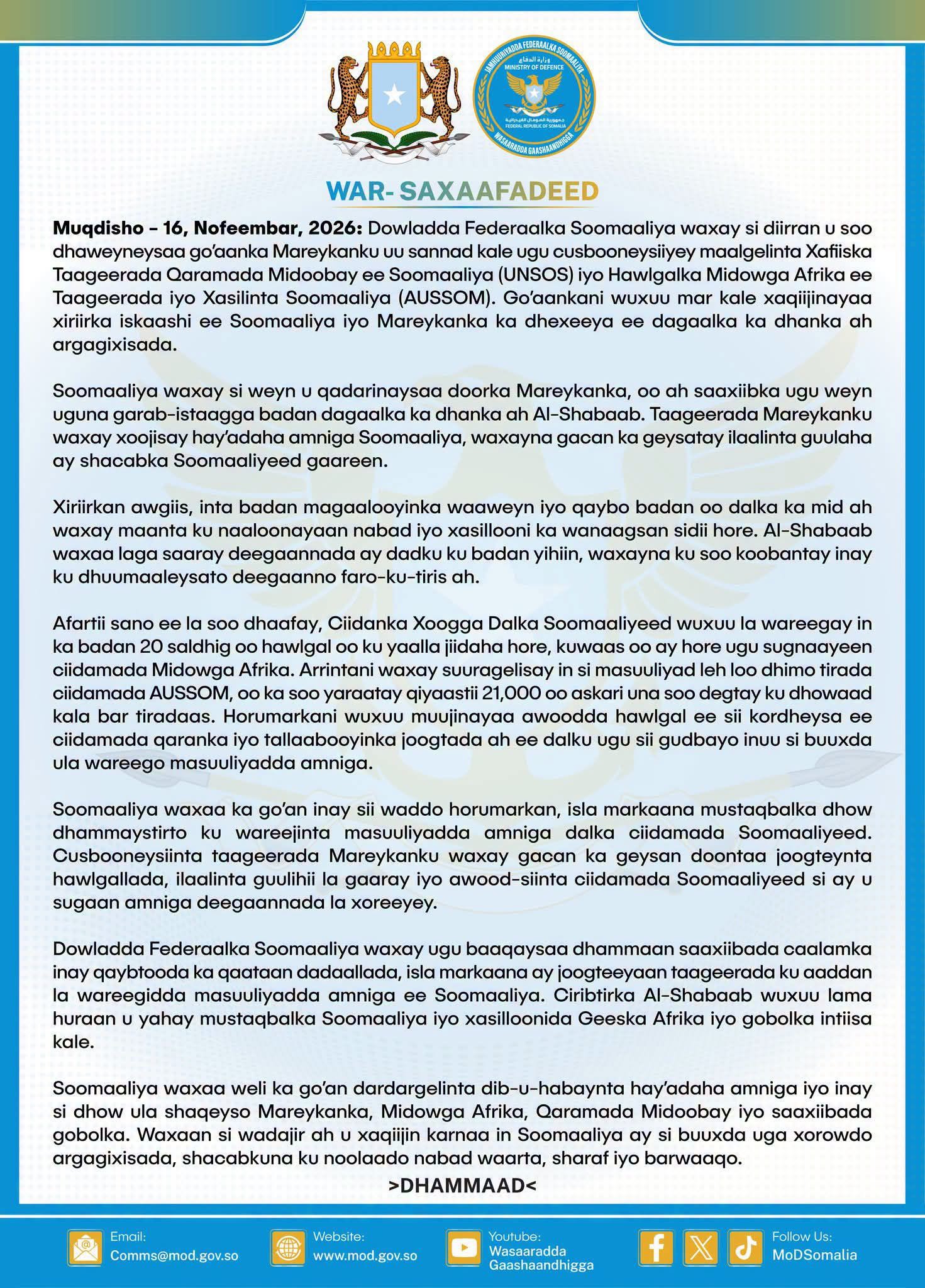
The United States' decision to extend support for AUSSOM and UNSOS for another year offers Somalia temporary relief from a looming security financing crisis. However, the reversal also exposes deeper questions about the sustainability of international military assistance, the readiness of Somali security forces and the political challenges surrounding the country's transition to national security ownership.
By The Somali Monitor
Latest Developments
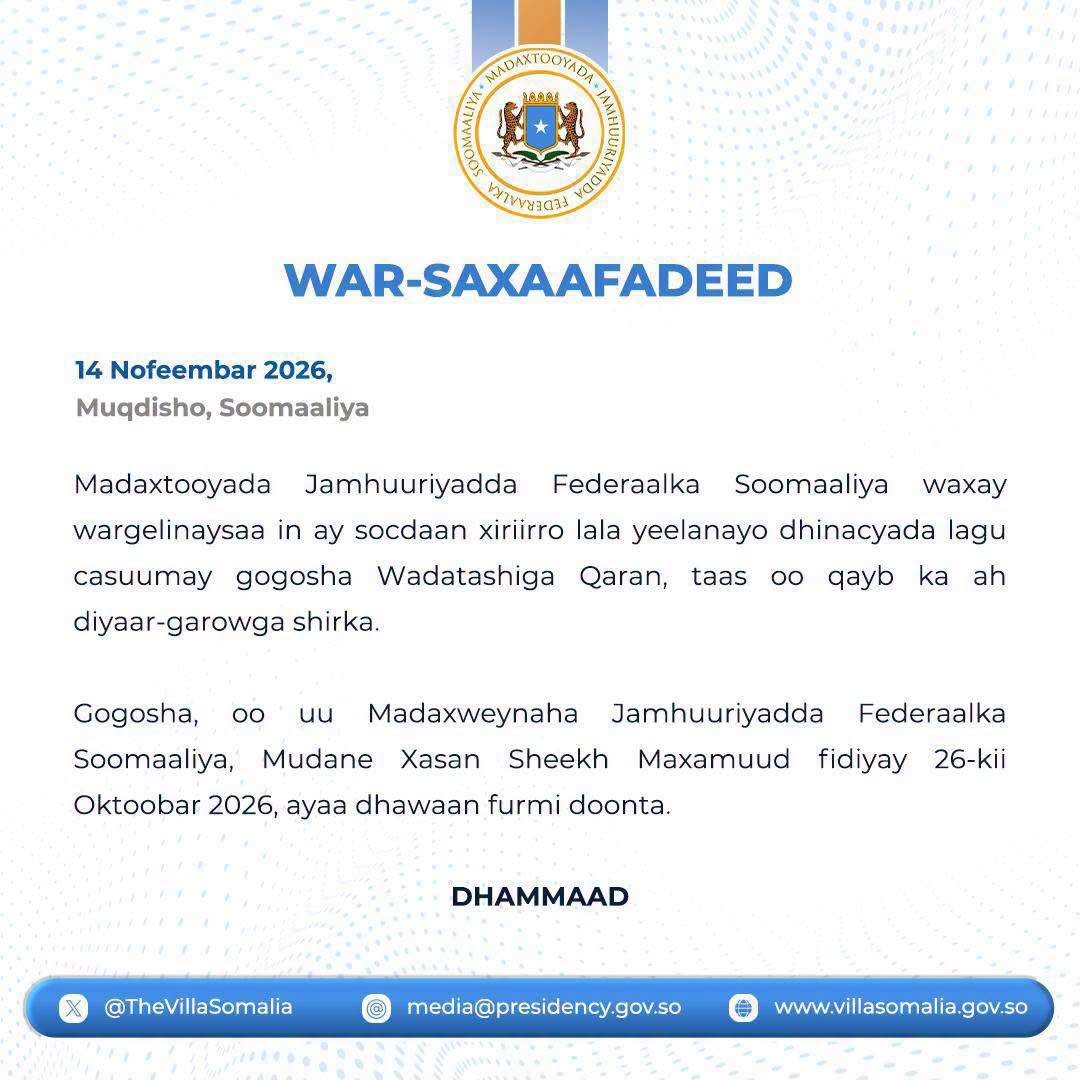
Somalia’s November 14 political talks unfold amid a deepening constitutional crisis, divided opposition and competing political initiatives in Mogadishu and reportedly in Garowe. While Farmaajo and Sharmarke appear open to dialogue, Deni and Madobe maintain a firmer position, raising questions about whether international mediation can bridge political divisions, restore electoral consensus and prevent further institutional confrontation.
By The Somali Monitor

Latest Developments
Former President Mohamed Abdullahi Farmaajo conveyed his position through senior security commanders who visited his residence on behalf of President Hassan Sheikh Mohamud. President Farmaajo called for inclusive dialogue, confidence-building, respect for international mediation and the resumption of September 3 negotiations, signalling conditional openness to the November 14–18 talks amid Somalia’s deepening political crisis
By The Somali Monitor
Analysis — Current Affairs
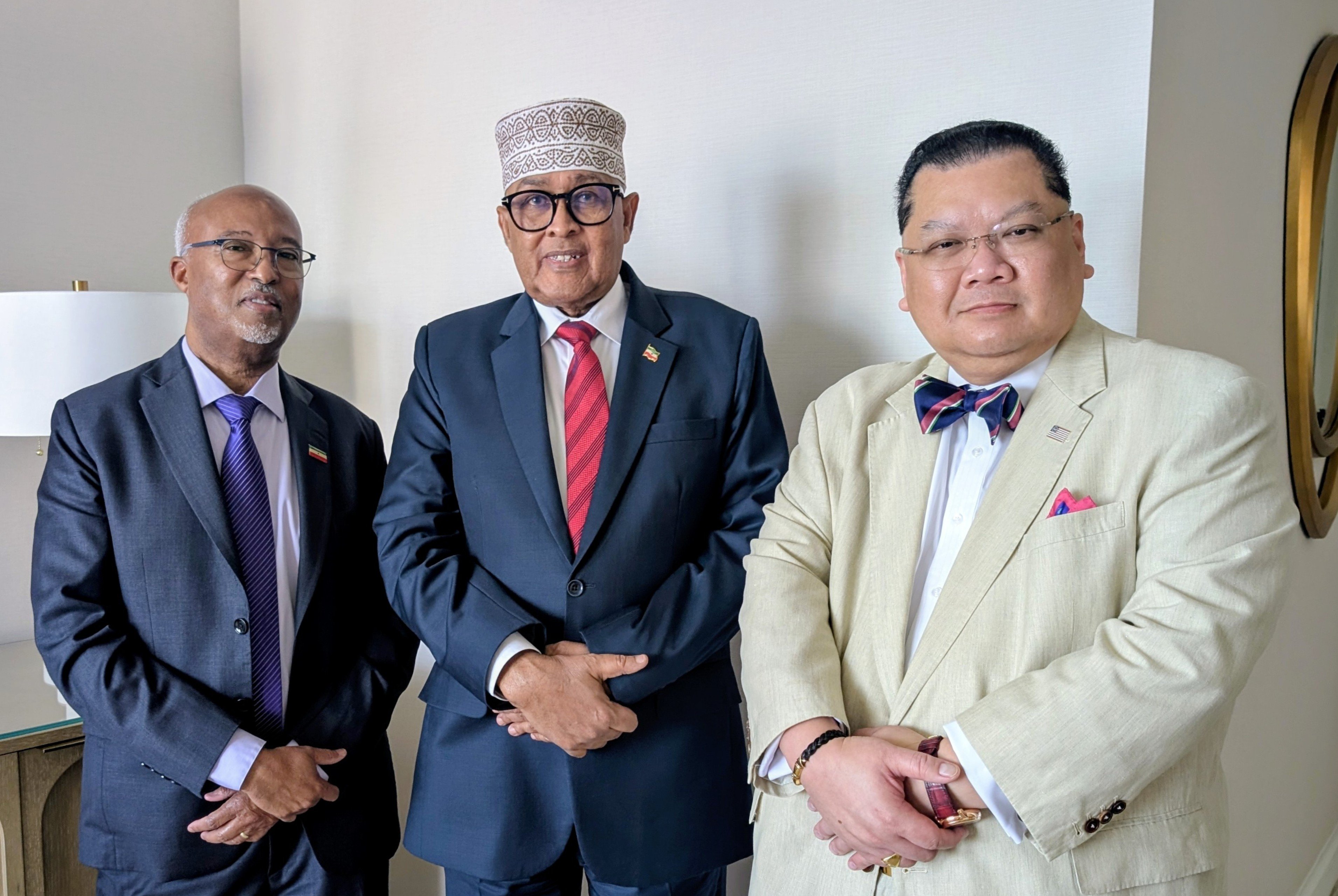
Growing congressional support, organized lobbying and strategic interests in the Red Sea have strengthened Somaliland's recognition campaign, but African opposition, territorial disputes and competing U.S. security interests continue to complicate its diplomatic ambitions.
By The Somali Monitor
Headline News
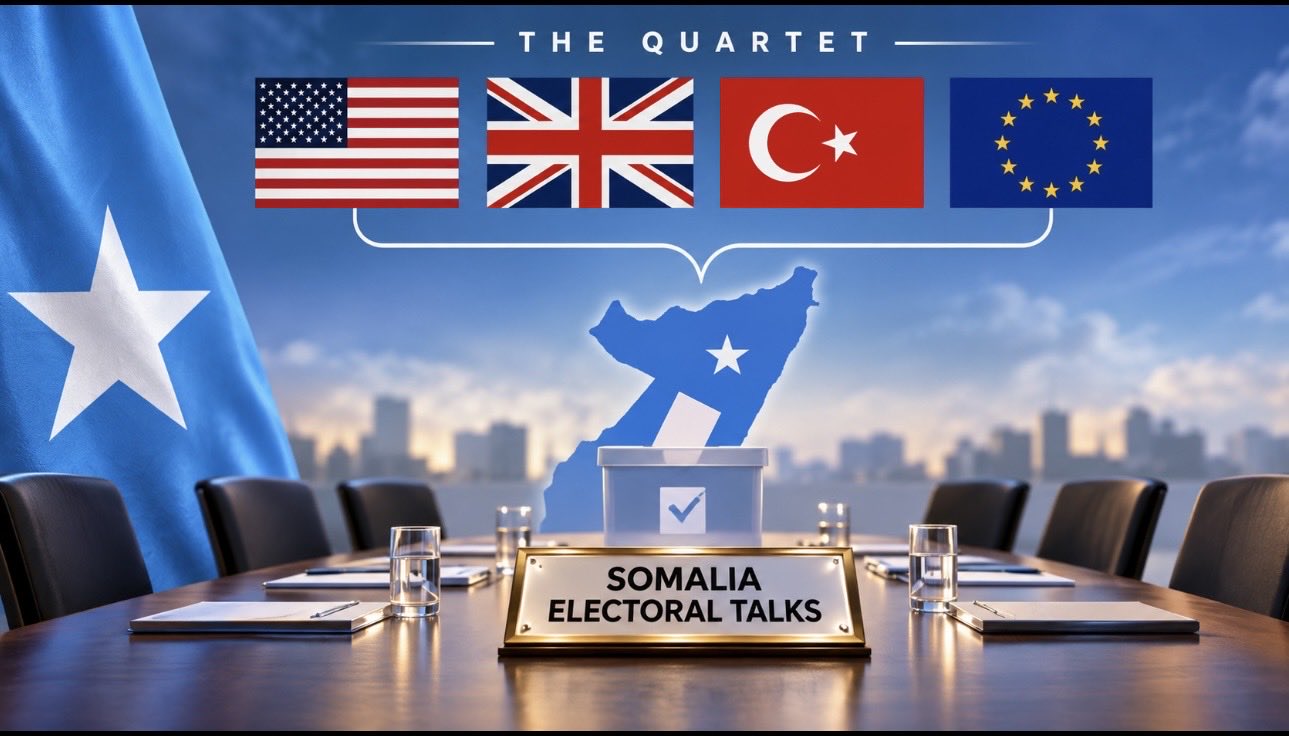
As reported, the Quartet—the UK, US, Türkiye and EU—has agreed to facilitate Somalia’s November 14–18 electoral talks, with Puntland and Jubaland expected to participate, amid deepening constitutional disputes and political tensions. The talks aim to secure a consensual electoral framework and break the political deadlock.
By The Somali Monitor

Latest Developments
Former President Farmaajo’s meeting with Türkiye’s Ambassador Ferhat Alkan comes amid mounting political pressure on President Hassan Sheikh Mohamud ahead of the November 14 national consultations. According to sources obtained by The Somali Monitor, the ambassador urged Farmaajo to participate in the meeting, suggesting a potentially broader Turkish diplomatic role in Somalia’s political dialogue. The engagement raises questions about Ankara’s evolving approach, opposition participation and whether the proposed consultations can overcome deep-rooted constitutional and electoral disputes ahead of the 2027 federal elections.
By The Somali Monitor
Headline News
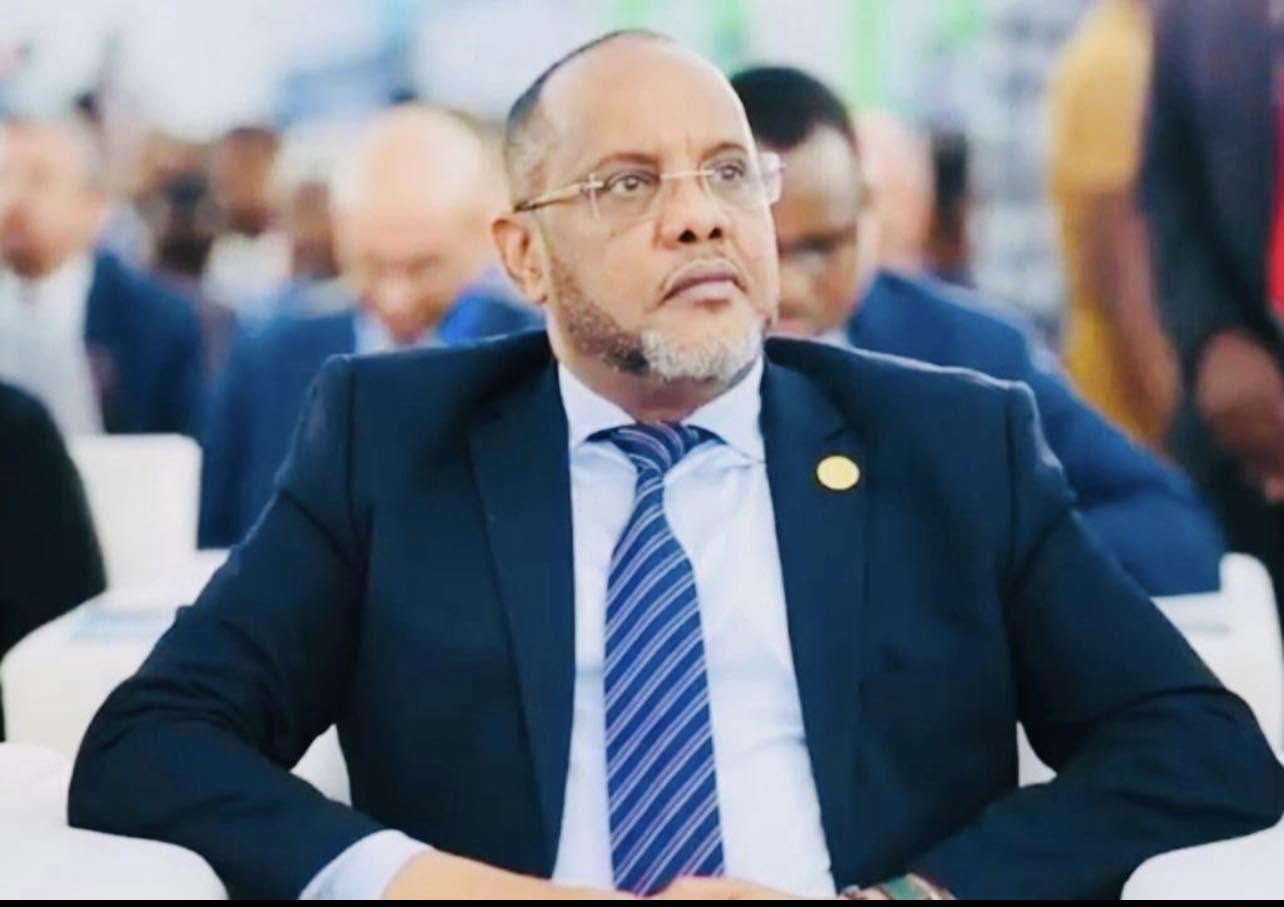
As obtained by The Somali Monitor, President Ahmed Madobe is expected to announce a new cabinet by late November or early December, with changes anticipated across key ministries. Former federal minister Abdirashid Jire Qalinle is among the prominent figures being considered for appointment following his resignation during the 2024 confrontation between Kismayo and Mogadishu.
By The Somali Monitor
CURRENT AFFAIRS
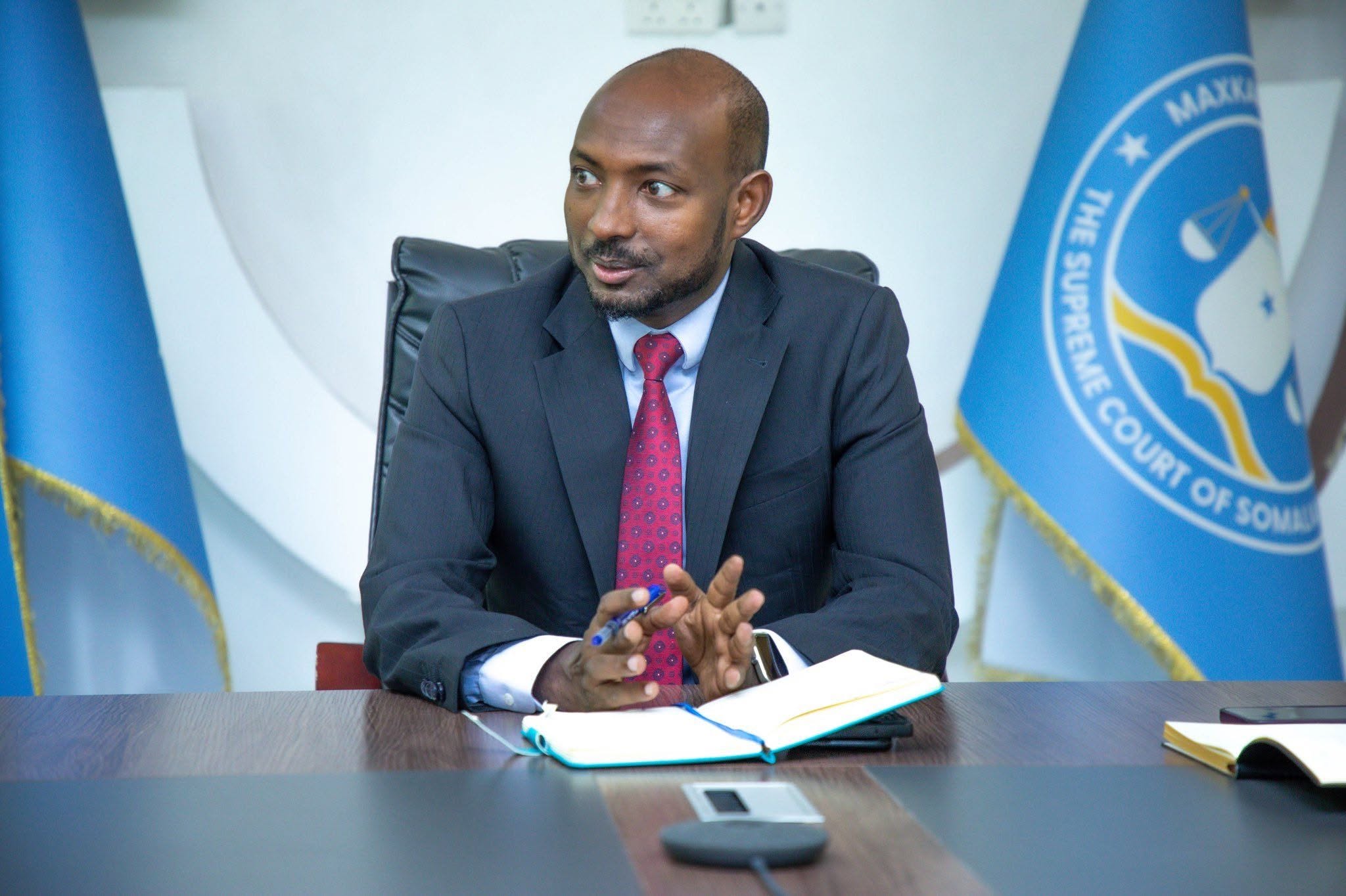
Sheikh Sharif’s constitutional petition has escalated into a confrontation over presidential term limits and judicial independence. The chief justice’s dismissal, the Supreme Court’s rejection of extended mandates and the government’s opposition to its ruling now test whether Somalia can resolve its electoral crisis through law and political agreement.
By The Somali Monitor

Headline News
Turkey’s expanding military, diplomatic and economic partnership with Somalia is strengthening President Hassan Sheikh’s political position amid constitutional disputes and federal tensions. While Ankara’s stated objectives focus on security and development, the use of Turkish-supported state capabilities in domestic political confrontations raises questions about executive power, institutional accountability and Turkey’s perceived neutrality
By The Somali Monitor
Latest Developments
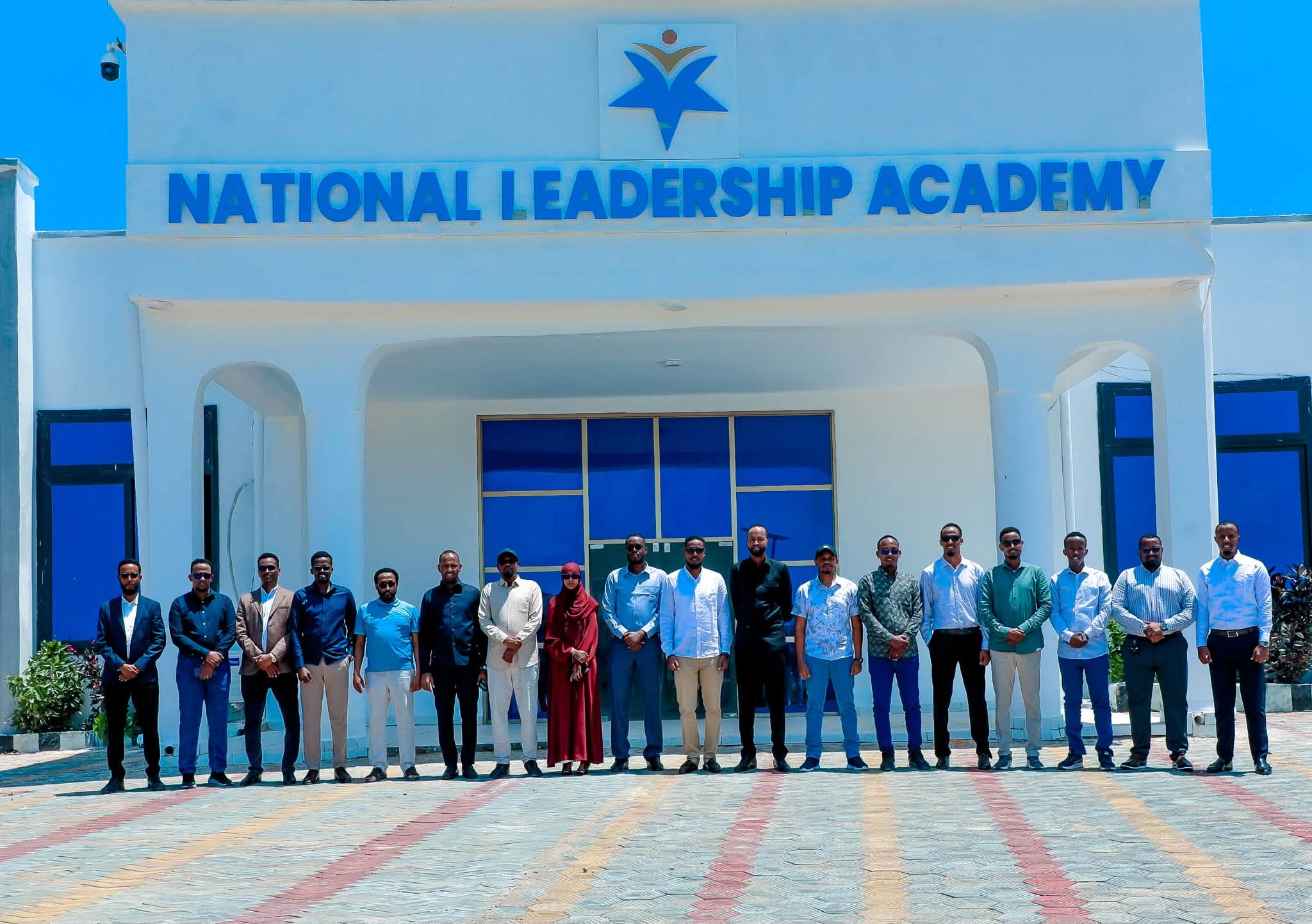
The establishment of the National Leadership Academy in Kismayo connects Prime Minister Hamza Abdi Barre's governance agenda with Somalia's National Transformation Plan, offering a potentially lasting investment in public-sector leadership, stronger federal institutions and administrative reform.
By The Somali Monitor

Analysis — Current Affairs
The comparison between Farmaajo and Hassan Sheikh highlights contrasting approaches to leadership, state-building and political compromise. Farmaajo's presidency was marked by institutional reforms, efforts to restore national sovereignty and, despite political controversies, an eventual willingness to negotiate and facilitate a peaceful transfer of power. Hassan Sheikh's pursuit of constitutional changes, party expansion and greater presidential authority has generated disputes over federal power-sharing and political inclusion. The analysis examines why compromise, rather than the consolidation of power, remains essential to protecting Somalia's hard-won institutional gains and the future of its Third Republic.
By The Somali Monitor

Headline News
From grass-roots community organizations, and media leadership to the national politics; Abdiwelli Garyare has built a diverse political career. His bid to be the next Galmudug Vice-President, reflects an emerging next generation of Somali leadership.
By The Somali Monitor

Analysis — Current Affairs
Jubbaland’s return to Beled Hawo following its reconciliation with Abdirashid Janan marks a significant shift in Gedo’s political and security balance, weakening the Federal Government’s previous influence. However, reported disagreements between President Ahmed Madobe and Vice President Mohamud Sayid Aden over Janan’s reintegration and political appointments suggest emerging divisions within Jubbaland’s leadership. The development highlights how shifting alliances can strengthen territorial control while creating new tensions over power-sharing and political authority.
By The Somali Monitor

Latest Developments
As the African Union Support and Stabilization Mission in Somalia (AUSSOM) approaches the expiry of its current mandate, President Hassan Sheikh Mohamud's latest visit to Uganda highlights the growing tension between Somalia's political divisions, its continued dependence on foreign military assistance and the uncertain future of its security transition.
By The Somali Monitor

Explainers
After years of legislative disputes, Somalia’s Lower House has approved a long-awaited bill addressing rape and sexual violence. Yet its significance will depend on whether the final legislation strengthens legal protections, resolves longstanding concerns and translates parliamentary consensus into meaningful justice for survivors.
By The Somali Monitor

Latest Developments
At a time when there are significant political disagreements between Somalia’s federal government and members states on electoral process and disputed constitution, the southwest crises have only escalated, given the government’s approach, further exacerbated by the actors involved. After eight years in office since 2018, President Abdiaziz Laftagreen has, in March 2026, secured his second term presidency through regional parliamentary vote, which the current federal government have rejected, terming it unconstitutional. After a short interim administration, former speaker of the federal government Sheikh Aden Madobe was hand-picked by the federal government, (se)elected as the Southwest President in June 2026, supported with military forces.
By The Somali Monitor
Analysis — Current Affairs
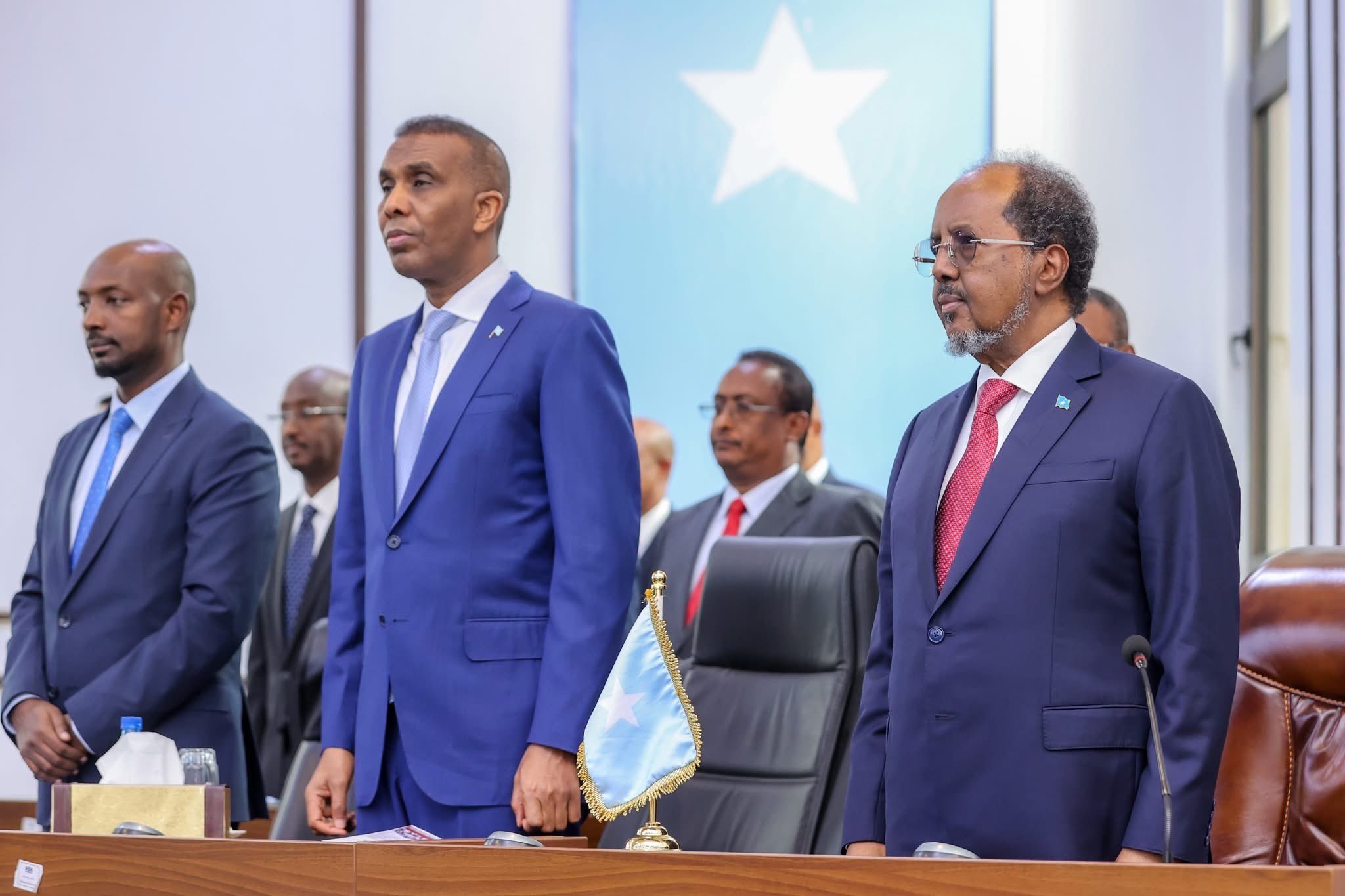
Prime Minister Hamza Abdi Barre’s political alliance with President Hassan Sheikh Mohamud has brought unusual stability to Somalia’s two highest executive offices, facilitating greater political coordination and continuity in constitutional and electoral reforms, economic recovery, security operations, public administration and broader state-building efforts.
Yet, amid deepening constitutional disputes and federal-state tensions, questions surrounding the Prime Minister’s political independence raise a fundamental concern: whether their partnership is strengthening Somalia’s institutions or primarily consolidating presidential authority.
By The Somali Monitor

Headline News
At a time of growing anti-Somali sentiment, immigrant scapegoating and political polarization, Somali-American Abdi Daisane’s candidacy for the Minnesota House of Representatives in District 14A carries significance beyond the United States. His journey from refugee displacement to political participation reflects the possibilities of inclusion, representation and civic leadership
By The Somali Monitor

Analysis — Current Affairs
Somalia’s 14 October constitutional deadline tests whether President Hassan Sheikh Mohamud will enforce provisions limiting executive power as consistently as those extending his mandate. The deeper question is whether the new constitution will genuinely constrain political authority or remain subject to selective implementation.
By The Somali Monitor
Headline News
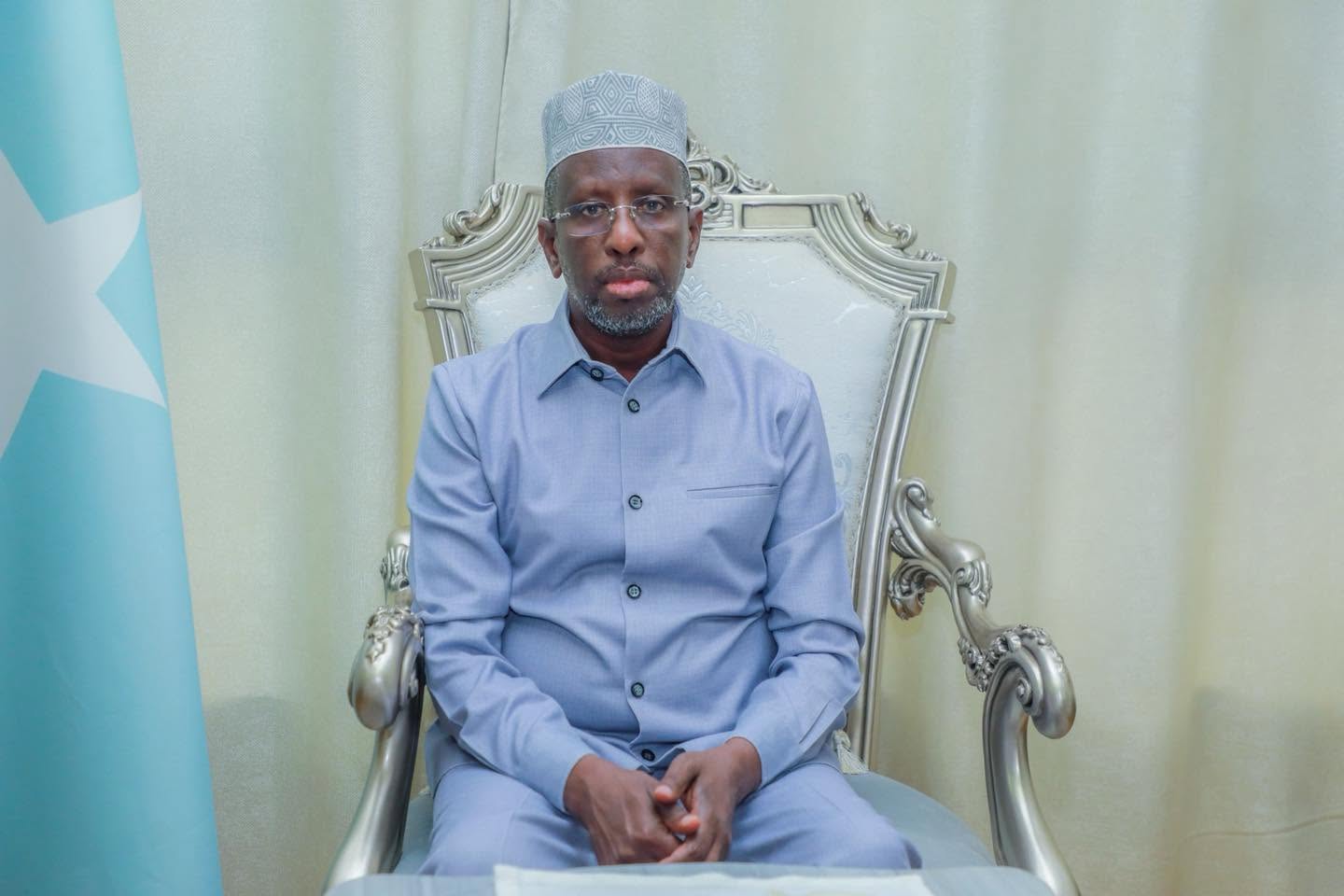
The NISA–Sharif confrontation reflects Somalia’s deepening political crisis. If the government resorts to force, it risks triggering clan-based mobilization, wider armed clashes and renewed chaos in Mogadishu. Such escalation could further weaken state authority, deepen political fragmentation and create opportunities for Al-Shabaab
By The Somali Monitor

CURRENT AFFAIRS
Somalia is trying to win the information war against Al-Shabaab, but the contest may be decided less by what the government says than by what it delivers.
By The Somali Monitor

Analysis — Current Affairs
As shifting geopolitics in the Horn of Africa and the Red Sea redraw regional alliances, Somalia is cautiously moving from reactive diplomacy toward strategic autonomy, balancing competing partnerships with Egypt, Ethiopia, Türkiye, and the Gulf while navigating persistent domestic fragmentation and institutional challenges.
By The Somali Monitor
CURRENT AFFAIRS
This document analyzes the historical and political dynamics surrounding Puntland's place within Somalia's federal structure. As one of the foundational federal member states established in 1998, Puntland chose state reconstruction and federalism over secession. However, recurring constitutional disputes and political friction with the Federal Government in Mogadishu—particularly over centralized authority, resource allocation, electoral models, and unilateral constitutional revisions—have placed severe strain on the federal compact.
By The Somali Monitor

Analysis — Current Affairs
At the center of Somaliland’s recognition dilemma lies what may be described as a sovereignty gap: the distance between exercising many of the functions associated with sovereign statehood and possessing internationally accepted sovereign status. Somaliland’s argument has long rested on the proposition that more than three decades of separate administration, political institutions and effective control have created a political reality that recognition should acknowledge rather than create. Yet the persistence of non-recognition demonstrates that effective statehood and recognized sovereignty are not necessarily the same thing.
By The Somali Monitor