The Somali Monitor
Somaliland's Recognition Push Gains Ground in Washington, but Major Barriers Remain
Growing congressional support, organized lobbying and strategic interests in the Red Sea have strengthened Somaliland's recognition campaign, but African opposition, territorial disputes and competing U.S. security interests continue to complicate its diplomatic ambitions.
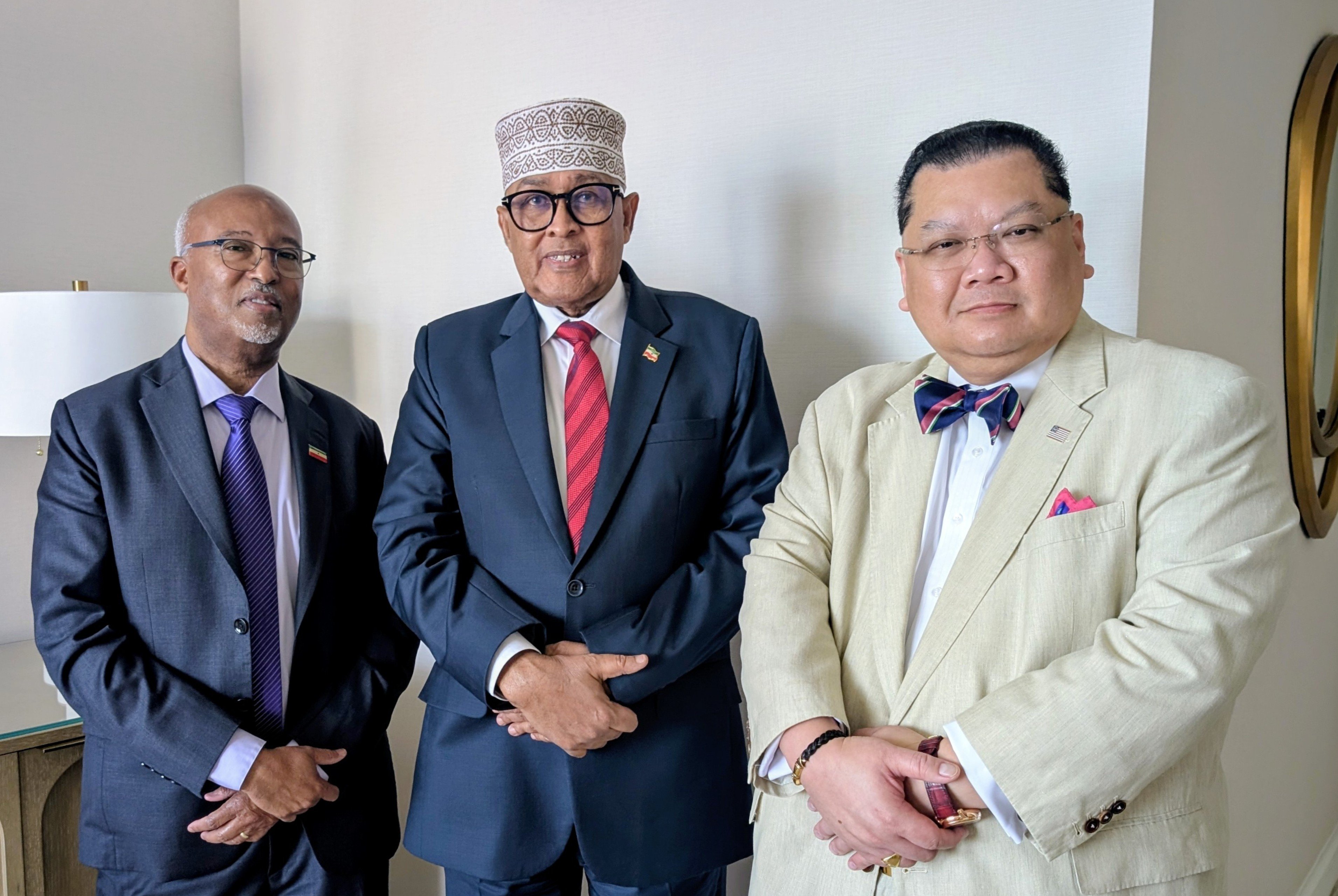
Photo courtesy: Somaliland delegation’s visit to the United States, Sept 2026
NAIROBI — November 11, 2026
Somaliland's decades-long campaign for international recognition has entered a consequential phase, with influential American lawmakers increasingly challenging Washington's longstanding One Somalia policy. Organized lobbying, strategic interests in the Red Sea and Israel's recognition in December 2025 have strengthened Hargeisa's diplomatic position. Yet these developments have not overcome the African Union's opposition, Somalia's internationally recognized sovereignty or unresolved territorial disputes that continue to complicate Somaliland's pursuit of broader international acceptance.
The latest development emerged on November 10, when Republican Senator Ted Cruz questioned Washington's position during the Senate Foreign Relations Committee confirmation hearing for Devin Kennington, President Donald Trump's nominee as ambassador to Somalia. Cruz argued that Somaliland's separate institutions, democratic elections and strategic partnerships justified reconsidering American policy. His intervention brought the recognition question directly into the confirmation process for Washington's next diplomatic representative in Mogadishu.
During the hearing, Cruz declared that “Somaliland is not Somalia” and questioned why the State Department had not moved toward recognition despite President Trump's earlier description of Somaliland as a distinct country. Addressing Kennington, Cruz pressed for an explanation of the obstacles preventing recognition and argued that American diplomatic policy should reflect the president's position. The nominee was consequently placed under direct congressional scrutiny over a question central to Somalia's sovereignty, although the available reporting does not establish that Kennington endorsed recognition or announced a departure from existing U.S. policy.
The exchange revealed a wider tension within Washington. While some Republican lawmakers increasingly view Somaliland as a potential strategic partner, the United States has maintained its formal recognition of Somalia's sovereignty and territorial integrity. The significance of the hearing therefore lies not in an announced policy change, but in the pressure being placed on the incoming American diplomatic leadership to reconsider the existing framework. Kennington, if confirmed, would be expected to represent Washington's official policy while navigating competing congressional expectations, counterterrorism priorities and relations with Mogadishu.
Somaliland's case rests partly on its distinct historical experience. The former British Somaliland Protectorate became independent in June 1960 before uniting with the former Italian-administered Somalia on July 1. Following the collapse of the Somali state and the repression experienced by northern communities under the Siad Barre dictatorship, Somaliland declared the restoration of its independence in May 1991. Since then, it has maintained separate governing institutions, security forces and competitive elections, including the November 2024 presidential election that brought Abdirahman Mohamed Abdullahi Irro to power.
However, Somaliland's recognition campaign has increasingly moved beyond historical grievances and democratic credentials. Its supporters now emphasize the territory's strategic location along the Gulf of Aden, the Port of Berbera, maritime security and competition with China. Somaliland's relationship with Taiwan has reinforced its appeal among American policymakers concerned about Beijing's expanding regional influence. The Council on Foreign Relations has examined how Somaliland's political development and strategic position have shaped international interest despite its disputed status.
This shift has been supported by sustained lobbying involving Somaliland's political leadership, diaspora organizations and sympathetic American lawmakers. The Somaliland Strategic Advisory Group and American Somaliland Council have promoted recognition through congressional outreach, policy advocacy and strategic partnerships. In June 2026, the Somaliland Strategic Advisory Group reported organizing a summit in Virginia that produced a 13-point call to action urging American recognition.
The campaign has also produced identifiable congressional initiatives. Senator Jim Risch questioned the effectiveness of the One Somalia policy in 2024, while Congressman Scott Perry introduced the Republic of Somaliland Independence Act in June 2025. Senator Cruz subsequently called for formal recognition in August 2025 and, in July 2026, urged separate travel guidance for Somaliland. He also met Somaliland President Irro in Washington in September 2026, reinforcing his public commitment to closer relations with Hargeisa.
Together, these efforts demonstrate how Somaliland's supporters have sought to transform recognition from a regional sovereignty dispute into an American strategic-policy question. Nevertheless, congressional statements, proposed legislation and advocacy campaigns cannot independently establish diplomatic recognition, which remains principally an executive decision.
Israel's formal recognition of Somaliland on December 26, 2025, marked the campaign's most significant diplomatic breakthrough. It established a precedent for recognition by a United Nations member state and strengthened Hargeisa's argument that its international status could change. However, the decision also exposed the limits of recognition pursued without broader regional agreement.
The African Union and IGAD rejected the decision and reaffirmed Somalia's territorial integrity. The European Union similarly maintained its support for Somalia's sovereignty. These responses demonstrated that recognition by an individual state does not automatically produce wider diplomatic acceptance or resolve the underlying political dispute. The African Union's position remains a particularly substantial obstacle. Somaliland's supporters argue that its case differs from conventional secession because the territory briefly existed as an independent state before voluntarily joining Somalia. However, African institutions remain concerned that unilateral recognition could undermine inherited territorial boundaries, encourage competing sovereignty claims and destabilize regional relationships. An Institute for Security Studies analysis examines this tension between Somaliland's historical arguments and the African Union's regional political commitments.
Beyond international diplomacy, Somaliland faces a significant territorial challenge following the 2023 conflict in Las Anod. The withdrawal of Somaliland forces, and the subsequent establishment of the North Eastern State aligned with Mogadishu have complicated Hargeisa's claims over parts of Sool and Sanaag. The European Union Agency for Asylum documents the competing territorial claims and fragmented administrative control. These developments raise a fundamental question about self-determination. Somaliland maintains that its boundaries correspond to those of the former British Protectorate, while communities represented by SSC-Khatumo and the North Eastern State reject incorporation into an independent Somaliland. Recognition would therefore not independently resolve disagreements over territorial authority, political representation or the preferences of communities within disputed areas.
Somalia's Federal Government, meanwhile, continues to benefit from broad international recognition and the diplomatic support of regional institutions. Yet its disputes with Puntland and Jubbaland, constitutional controversies and electoral disagreements have complicated efforts to present a unified national political framework. Somaliland's supporters frequently cite these divisions as evidence that reunification lacks a credible political foundation. However, Somalia's internal difficulties do not independently establish Somaliland's entitlement to recognition, just as Somaliland's governance achievements do not eliminate its territorial disputes. For Mogadishu, defending national unity requires more than international diplomatic support; it also requires credible federal institutions capable of accommodating regional grievances. For Hargeisa, the challenge is demonstrating that its independence project can address competing political preferences within its claimed territory.
Washington consequently faces competing strategic considerations. Recognition advocates argue that Somaliland could offer maritime security cooperation, commercial access and strategic partnerships near the Bab al-Mandab Strait. Yet the United States also maintains substantial counterterrorism cooperation with Mogadishu, particularly against Al-Shabaab and ISIS-Somalia, alongside broader regional security commitments. Formal recognition could complicate these relationships and generate opposition from African governments. Alternatively, Washington could expand commercial, diplomatic and security engagement with Somaliland without changing its formal recognition policy. This distinction is central: closer strategic cooperation does not necessarily require recognition, and recognition alone would not settle Somaliland's disputed boundaries or regional political relationships.
The November 10 confirmation hearing illustrates the recognition campaign's growing visibility, but also its limitations. Cruz's questioning demonstrated a willingness among influential lawmakers to challenge the State Department directly, while Kennington's nomination placed those competing policy expectations before a prospective American ambassador to Somalia. Yet the hearing did not establish that Washington had adopted a new recognition policy. Though seemingly not enough, Somaliland have brought their arguments into American legislative debates, while Israel's decision has demonstrated that formal recognition is possible. Nevertheless, the African Union's opposition, Somalia's established diplomatic position and unresolved territorial disputes continue to constrain broader acceptance.
The central question is no longer simply whether Somaliland can attract influential supporters in Washington, but whether congressional advocacy and strategic partnerships can translate into wider international recognition without aggravating existing political and territorial disputes. For Somalia, the challenge is equally significant. International recognition remains a substantial diplomatic advantage, but lasting political unity requires institutions capable of addressing historical grievances and competing constitutional aspirations. For Somaliland, diplomatic progress must be considered alongside the political rights and preferences of communities within its claimed territory. And ultimately, the recognition debate is increasingly shaped by foreign strategic interests, particularly competition over the Red Sea and the Horn of Africa. Yet the underlying dispute remains rooted in Somali political history, contested sovereignty and unresolved questions of representation. Without a credible political settlement, international engagement may change the diplomatic environment without resolving the divisions that have sustained the dispute for more than three decades.