
The Somali Monitor
Somalia's Intelligence NISA Accuses Former President Sharif’s Forces of Aggression
The NISA–Sharif confrontation reflects Somalia’s deepening political crisis. If the government resorts to force, it risks triggering clan-based mobilization, wider armed clashes and renewed chaos in Mogadishu. Such escalation could further weaken state authority, deepen political fragmentation and create opportunities for Al-Shabaab
Himilo Party
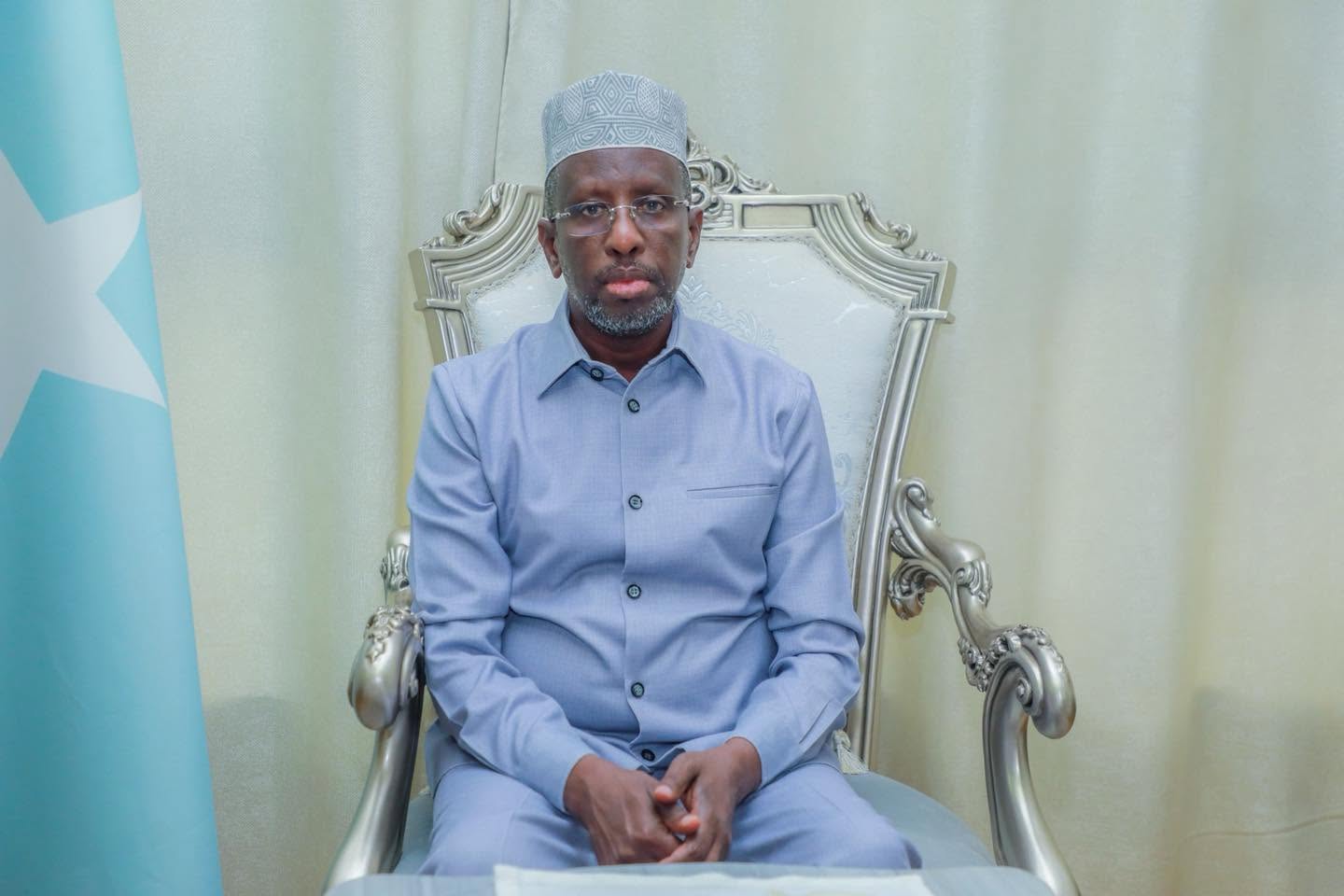
MOGADISHU, Somalia — Somalia’s National Intelligence and Security Agency (NISA) on Sunday, October 11, accused armed personnel associated with former President Sharif Sheikh Ahmed of attacking and obstructing its forces in Wadajir District, drawing a sharp rebuttal from the former president. The confrontation, unfolding amid reports of government security deployments near opposition residences, has brought Somalia’s deepening political divisions into sharper focus, raising questions about the neutrality of security institutions, political freedoms and the consequences of unresolved constitutional and electoral disputes.
In its statement, NISA alleged that armed personnel operating under Sharif’s command, equipped with AK-47 rifles, machine guns and rocket-propelled grenades, entered residential properties in the Tiintiinley neighborhoods and attempted to provoke a confrontation with its Public Protection Forces. The agency linked the incident to earlier confrontations on June 24 and 27, including the alleged abduction of an officer and obstruction of security operations in the General Da’ud area. NISA maintained that its personnel exercised restraint and operated within their legal mandate.
In a formal response issued the same day, Sharif categorically rejected NISA’s allegations, describing them as false and misleading. He argued that the agency’s statement misrepresented recent security incidents near his residence and risked damaging the reputation of opposition leaders. While acknowledging the importance of national security and lawful enforcement, Sharif maintained that security institutions must remain politically neutral and apply the law equally, irrespective of political affiliation.
Sharif further alleged that unidentified armed personnel and vehicles had appeared near his residence, creating fear among surrounding communities. He said his security personnel had exercised restraint to avoid confrontation and called for the incidents to be properly documented and independently investigated. His statement also warned against using unverified security allegations to justify political pressure or intimidation, while reaffirming his commitment to dialogue and a consensual electoral process. The competing accounts have not been independently verified.
From Political Deadlock to Security Confrontation
The confrontation comes amid prolonged disagreements over Somalia’s constitutional and electoral direction. Since the contested constitutional amendments of March 2024, relations between Villa Somalia, opposition leaders and federal member states, particularly Puntland and Jubbaland, have remained strained over federal authority, political representation and the legitimacy of constitutional changes undertaken without broader consensus. What began as a dispute over the rules governing Somalia’s political transition increasingly risks becoming a confrontation over the exercise of state authority.
The latest tensions followed Sharif’s return from a family visit to Abu Dhabi in early October. Upon returning to Mogadishu, the former president accused the administration of using his visit as a pretext for possible action against opposition leaders, alleging that weapons intended for operations against Al-Shabaab could instead be deployed near opposition residences. Defence Minister Ahmed Moalim Fiqi had reportedly criticized opposition figures meeting in the United Arab Emirates, prompting Sharif to reject allegations of disloyalty. These exchanges illustrate how external political contacts, domestic opposition activities and national security concerns have become increasingly entangled in Somalia’s political disputes.
The current confrontation also follows earlier allegations of politically motivated security operations. In September 2025, a complaint submitted to the Inter-Parliamentary Union described an armed attack involving heavy weapons against a delegation that included Sharif in Mogadishu’s Siinay neighbourhood. Opposition representatives characterized the incident as an assassination attempt. During the June 2026 confrontations, opposition figures similarly alleged the use of heavy weapons and drones against their positions. These allegations remain contested, while government representatives have maintained that their security operations are intended to address unlawful armed activity and maintain public order.
Reports circulating on October 11 also described deployments of military vehicles near the residences of Sharif and former Prime Minister Hassan Ali Khaire, alongside unconfirmed claims of a disarmament ultimatum. Although the extent and purpose of these reported deployments remain unclear, their political significance lies in the possibility that security measures directed at politically affiliated armed personnel could deepen an already fragile relationship between the government and opposition.
The Security Imbalance and Political Costs of Escalation
Any direct confrontation would involve considerable differences in institutional resources between federal security agencies and the former president’s protective personnel. Government forces possess broader command structures, logistical resources and access to heavier equipment, while Sharif’s security arrangements are principally intended for personal and residential protection. However, the precise strength, deployment and operational capabilities of the personnel involved remain unverified.
Yet the consequences of escalation cannot be measured through military capacity alone. Sharif’s standing as a former president, his political organization and his relationships within Somalia’s wider opposition landscape give the confrontation significance beyond Wadajir District. An armed operation against his residence could intensify political grievances, provoke wider mobilization and further undermine confidence in the neutrality of national security institutions. It could also divert political attention and security resources from the continuing threat posed by Al-Shabaab.
The government, meanwhile, faces a legitimate security dilemma. Allowing politically affiliated armed formations to operate without effective oversight can weaken state authority, yet enforcing disarmament selectively or without transparent procedures risks reinforcing perceptions that security institutions serve incumbent political interests. The challenge is therefore not simply whether the state possesses the capacity to impose its authority, but whether that authority can be exercised lawfully and credibly without deepening political fragmentation.
The Wider Institutional Crisis
The Wadajir confrontation exposes a more consequential institutional problem: the difficulty of separating national security enforcement from political competition when the constitutional and electoral foundations of state authority remain contested. Where political actors distrust the neutrality of security institutions, even legitimate operations can be interpreted as intimidation. Conversely, the continued presence of politically affiliated armed personnel can provide grounds for further enforcement measures, creating a cycle of suspicion and confrontation.
Sharif’s formal response is particularly significant because it does not reject the principle of state security authority. Rather, it disputes how that authority is exercised and whether security institutions remain sufficiently independent of political rivalries. NISA similarly insists that its operations are lawful and politically neutral. Both positions therefore invoke institutional legitimacy, but their conflicting accounts demonstrate the difficulty of establishing public confidence when security operations unfold within an unresolved political dispute.
Neither the government's responsibility to maintain public security nor the opposition's right to political participation can be treated as absolute. National security institutions must enforce the law consistently and remain accountable, while political leaders must ensure that their protective arrangements operate within lawful boundaries. Establishing the facts surrounding the reported incidents, clarifying the authority of armed personnel and preventing further escalation are therefore immediate priorities.
More fundamentally, the confrontation reflects the growing cost of Somalia’s unresolved political settlement. Constitutional disagreements contested electoral arrangements and weakening trust between federal authorities and opposition leaders increasingly shape how security decisions are interpreted and contested. Unless these disputes are addressed through credible political negotiations, localized confrontations risk becoming recurring expressions of a deeper struggle over state authority. The question is no longer simply whether Mogadishu can enforce security, but whether Somalia’s institutions can exercise that authority without turning political disagreement into armed confrontation.
THE SOMALI MONITOR