The Somali Monitor
Where Is Prime Minister Hamza Amid Somalia’s Political Disagreements?
As President Hassan Sheikh Mohamud advances constitutional and electoral reforms while Puntland, Jubaland and opposition leaders challenge their legitimacy, growing national and international concern raises questions about Prime Minister Hamza Abdi Barre’s institutional and constitutional role in preventing Somalia’s political divisions from undermining its federal state-building process.
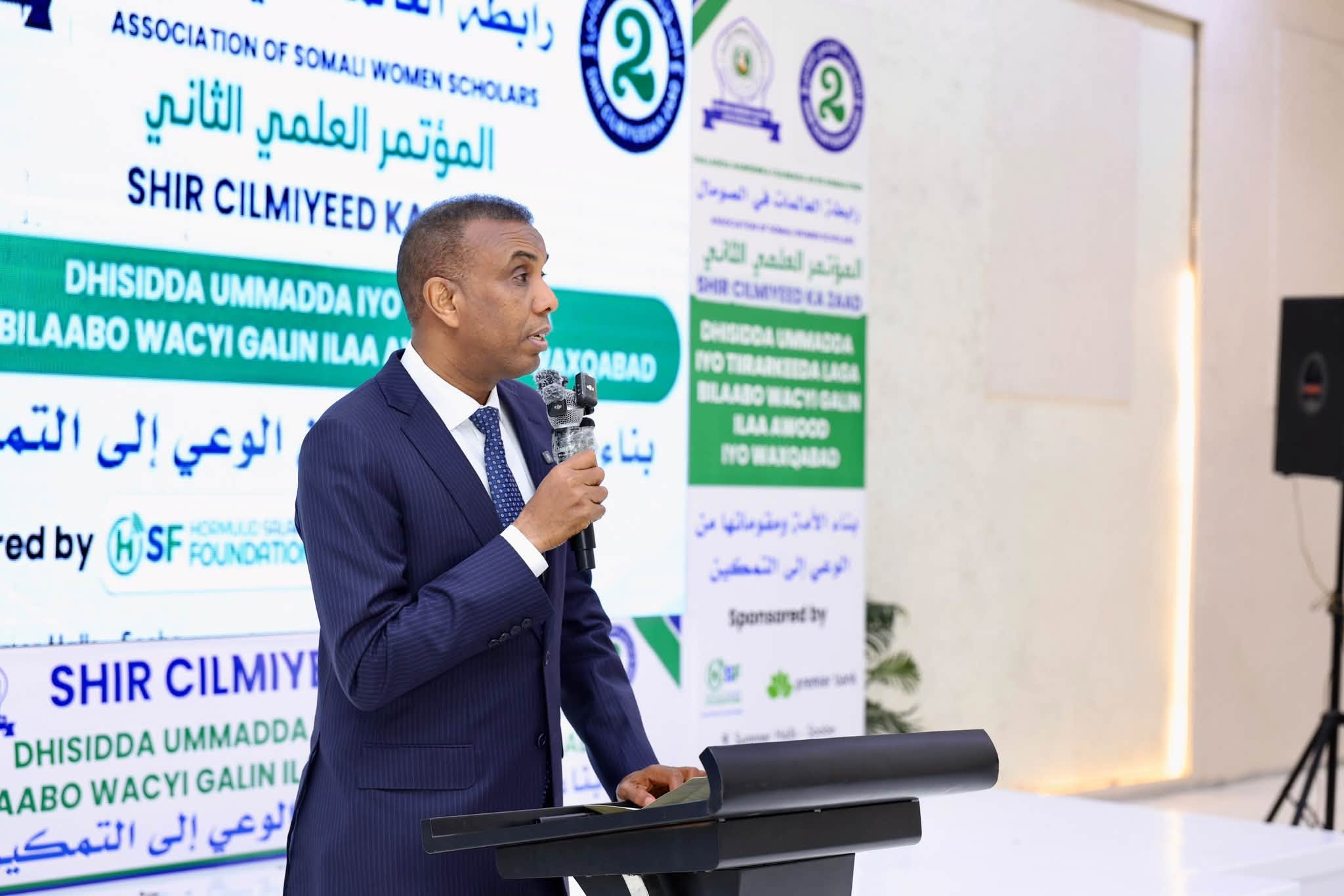
OPM Somalia
MOGADISHU, Somalia — Somalia’s deepening constitutional and electoral disagreements have increasingly placed President Hassan Sheikh Mohamud and opposition leaders, including the administrations of Puntland and Jubaland, on opposing sides of a widening political divide. While the presidency maintains that constitutional reform and direct elections are essential to completing Somalia’s democratic transition, its opponents challenge the legitimacy of the process and its implications for federal power-sharing. As these competing positions become more entrenched, repeated calls for dialogue from the United Nations, African Union and international partners underscore the risks of a political confrontation extending beyond elections to the foundations of Somalia’s federal settlement. Yet comparatively little attention has focused on Prime Minister Hamza Abdi Barre, whose constitutional responsibilities place him in an important position to facilitate political accommodation without becoming a competing authority to the presidency.
At the centre of the confrontation are two competing interpretations of Somalia’s constitutional transition. As shown in his most recent nation address, 25 October 26, President Hassan Sheikh argues that completing the constitutional review and replacing indirect elections with universal suffrage would strengthen democratic participation, clarify government authority and reduce recurring disputes over political mandates. Puntland, Jubaland and opposition leaders, however, contend that constitutional and electoral reforms require meaningful consultation, respect for federal powers and agreement on the rules governing political competition. These disagreements intensified following the March 2024 constitutional amendments, which Puntland rejected, and the subsequent deterioration of relations between Mogadishu and Jubaland over its contested November 2024 presidential election. Parliament’s approval of further constitutional revisions in March 2026 did not resolve the underlying political divisions. The dispute therefore concerns not simply whether Somalia should hold direct elections, but who has the authority to determine the constitutional rules, how regional administrations participate and whether reforms can be implemented without the cooperation of major federal stakeholders.
The consequences of these competing positions are significant. Advancing constitutional implementation without sufficient political agreement risks creating electoral arrangements whose authority remains disputed across parts of the federation. Conversely, continued rejection of national reforms without a workable alternative risks prolonging indirect political selection, institutional uncertainty, parallel processes and recurring disagreements over political mandates. The greater danger is that constitutional authority and political legitimacy become competing claims rather than complementary requirements of federal governance. Somalia’s federal government exercises national constitutional responsibilities, but federal member states retain substantial authority over local administration, security and public services. A sustainable political transition consequently requires both functioning national institutions and cooperation among the authorities responsible for implementing their decisions.
This tension helps explain the international community’s concern. In February 2026, the African Union Peace and Security Council emphasized the importance of political cooperation among Somali stakeholders. Following unsuccessful negotiations between the Federal Government and the Somali Future Council on May 13–15, the African Union Commission expressed concern that the discussions had ended without consensus and called for renewed dialogue, compromise and respect for constitutional order. International partners have similarly urged agreement on an electoral roadmap. These appeals neither reject Somalia’s ambition to introduce direct elections nor assign personal responsibility for the impasse to Prime Minister Hamza. Rather, they reflect concern that unresolved political divisions could undermine electoral credibility, federal cooperation and stabilization. The African Union’s warning against increasingly entrenched positions is particularly relevant because it identifies the breakdown of political accommodation—not disagreement alone—as a danger to Somalia’s transition.
It is within this political and institutional context that Hamza’s role becomes particularly relevant. Somalia’s constitutional framework distinguishes the President as head of state from the Prime Minister as head of government, responsible for leading the Council of Ministers and coordinating government policy. His close cooperation with Hassan Sheikh since June 2022 has avoided the prolonged executive confrontations that characterized previous administrations. However, cooperation with the presidency does not diminish the premiership’s responsibilities for government coordination, parliamentary accountability and engagement with federal institutions. The institutional question is whether that cooperation can also provide a basis for wider political reconciliation rather than remain primarily focused on implementing the federal executive’s position.
Somalia’s 2021 electoral crisis offers a relevant precedent. Following President Mohamed Abdullahi Farmaajo’s controversial mandate extension and the armed tensions that followed in Mogadishu, Prime Minister Mohamed Hussein Roble became a central coordinator of negotiations with federal member states and opposition representatives. His involvement contributed to the May 27 electoral agreement welcomed by the United Nations, demonstrating how the premiership could facilitate political compromise during a national impasse. Roble’s subsequent disagreements with Farmaajo also exposed the risks of executive rivalry. The lesson for Hamza is therefore not to reproduce confrontation with the presidency, but to recognize that the premiership can provide an additional institutional channel for negotiations when political disagreement extends beyond the executive itself.
Hamza’s own record demonstrates that he has participated in consequential federal political initiatives. The UN Secretary-General’s September 2025 report documented his engagement with the Sool, Sanaag and Cayn-Khatumo administration and his participation in National Consultative Council discussions that proceeded without Puntland President Said Abdullahi Deni and Jubaland President Ahmed Madobe. In February 2026, Hamza also attended a meeting between President Hassan Sheikh and Somali Future Council representatives, demonstrating his presence in efforts to reopen dialogue. More recently, on October 14, he chaired an extraordinary cabinet meeting approving measures to implement the revised Constitution, including the preparation of legislation defining federal institutions and their responsibilities. These developments establish that Hamza has not been politically inactive. They also reveal the distinction between his documented role in advancing federal government decisions and the less clearly established contribution of his office to restoring political agreement with Puntland, Jubaland and opposition stakeholders.
Hamza’s earlier political involvement in Jubaland adds another dimension to this question. Before becoming Prime Minister, he chaired the Jubaland Independent Boundaries and Electoral Commission and was elected to the Federal Parliament through Kismayo in December 2021. His longstanding association with Hassan Sheikh therefore exists alongside experience within Jubaland’s political institutions. Although these connections do not make him a representative of Jubaland or any particular clan constituency, they illustrate the political relationships and institutional experience he brings to federal engagement. The deterioration of relations between Mogadishu and Jubaland also demonstrates that personal connections cannot substitute for negotiated agreements. The opportunity for Hamza lies in using his national responsibilities to facilitate discussions between political authorities whose disagreements have become increasingly difficult to resolve through presidential-level engagement alone.
A constructive approach would be for Hamza to exercise his existing responsibilities as head of government by facilitating structured engagement between the federal executive, Puntland, Jubaland and opposition representatives. This would not require him to challenge Hassan Sheikh’s authority or assume a new political mandate. Rather, it would give greater practical expression to the premiership’s established role in coordinating government institutions and promoting cooperation across the federation. Articles 50 and 51 of Somalia’s 2012 Provisional Constitution establish principles of cooperative federalism, intergovernmental consultation and peaceful dispute resolution. Article 54 provides for negotiated arrangements concerning the allocation of federal powers, while Article 142 contains transitional protections and consultation requirements relevant to pre-existing federal member states. The application of these provisions must be considered in light of the constitutional revisions adopted since 2024 and the continuing disputes over their legitimacy. Nevertheless, the principles of cooperation and negotiated federal relations provide a substantive basis for examining how political disagreements might be addressed through institutions rather than unilateral decisions.
A political cooperation framework could help translate those principles into practical arrangements. For Puntland, negotiations could address constitutional consultation, the allocation of federal powers and the status of previous intergovernmental agreements. For Jubaland, they could examine regional electoral authority, federal–state relations and the recognition of political institutions. Opposition leaders could seek agreement on electoral procedures, political inclusion and safeguards against unilateral changes affecting political mandates. The federal government, in turn, could pursue its commitment to direct elections through arrangements that accommodate regional participation and maintain constitutional accountability. These interests are not identical, but they identify subjects on which negotiations could proceed without requiring either side to abandon its position before discussions begin. Such a framework would need reciprocal commitments, clearly defined procedures and respect for the responsibilities of Parliament, electoral authorities and other constitutional institutions.
The urgency of such an approach is reinforced by evidence that Somalia’s constitutional disagreements are increasingly producing competing claims to political authority, with consequences extending beyond Mogadishu. On October 15, the National Independent Electoral and Boundaries Commission announced a timetable for parliamentary elections in April 2027 and a presidential election in May, advancing the federal government’s commitment to direct elections. Former President Sharif Sheikh Ahmed rejected the timetable, warning that proceeding without political consensus could lead to parallel elections and competing claims to national leadership. The concern became more pronounced on October 25, when Puntland President Said Abdullahi Deni, addressing the opening of the regional parliament’s 59th session, rejected an electoral process determined solely by Villa Somalia and called for an urgent national conference to safeguard Somalia’s state institutions and resolve constitutional disagreements. Although Deni’s call did not constitute the establishment of a parallel government, it underscored the possibility of a rival political process emerging if the federal government and its opponents remain unable to agree on a common electoral framework. The confrontation has already acquired a more dangerous dimension in South West State, where fighting between federal-backed forces and supporters of former President Abdiaziz Laftagareen has demonstrated how disputes over constitutional authority and regional political leadership can escalate into armed conflict. Reporting by the Associated Press documented civilian casualties and displacement during clashes around Baidoa, while Chatham House has warned that Somalia’s political fragmentation, combined with regional rivalries and competing external security relationships, could contribute to a more prolonged conflict. These developments reveal a serious institutional risk: Somalia could enter its next electoral transition with competing political processes, rival claims of legitimacy and weakened cooperation among the authorities responsible for governing and securing the country. For Hamza, the challenge therefore extends beyond maintaining cabinet cohesion or implementing constitutional reforms. It concerns whether the premiership can help prevent a contested electoral transition from becoming a wider crisis of federal authority. (Somalia Today, October 15; Garowe Online, October 25; Associated Press; Chatham House, October 2026).
At this critical juncture, Hamza’s most consequential contribution could lie in balancing cooperation with President Hassan Sheikh against the wider constitutional responsibility of sustaining a functioning federal government. That balance need not involve political confrontation or departure from the administration’s commitment to direct elections. Instead, it would require using the premiership’s established coordinating responsibilities to facilitate negotiations, address legitimate federal–state concerns and help develop a political cooperation framework through which constitutional reform can proceed with broader institutional acceptance. This approach has a clear foundation in Somalia’s constitutional experience: Article 50(1)(c) of the 2012 Provisional Constitution emphasizes mutual cooperation and support between federal and state governments, Article 50(1)(g) identifies dialogue and reconciliation as means of resolving disputes, and Article 51 provides for regular consultation among executive leaders and mechanisms for resolving intergovernmental disagreements. The African Union’s May 2026 appeal for genuine negotiation and mutual compromise reinforces the contemporary relevance of these principles. Somalia’s experience in 2021 further demonstrates that political accommodation can become essential when disagreements over electoral authority threaten national stability. Hamza’s role should consequently be understood not as choosing between the President and his opponents, but as helping connect constitutional implementation with the political cooperation necessary to sustain it. The larger institutional risk is that Somalia could continue strengthening the formal structures of government while weakening the federal relationships required for those structures to function. Preventing that divergence—and protecting the country’s hard-won state-building gains from further fragmentation—would give the premiership a particularly important role in Somalia’s present political transition.