The Somali Monitor
Somalia's Promised Vote: Inside the Push Toward One Person, One Vote
After five decades of clan-based indirect voting, Somalia is attempting its first direct national election — but a disputed presidential mandate and a boycott by two federal states have turned the transition into a constitutional standoff.
UN News
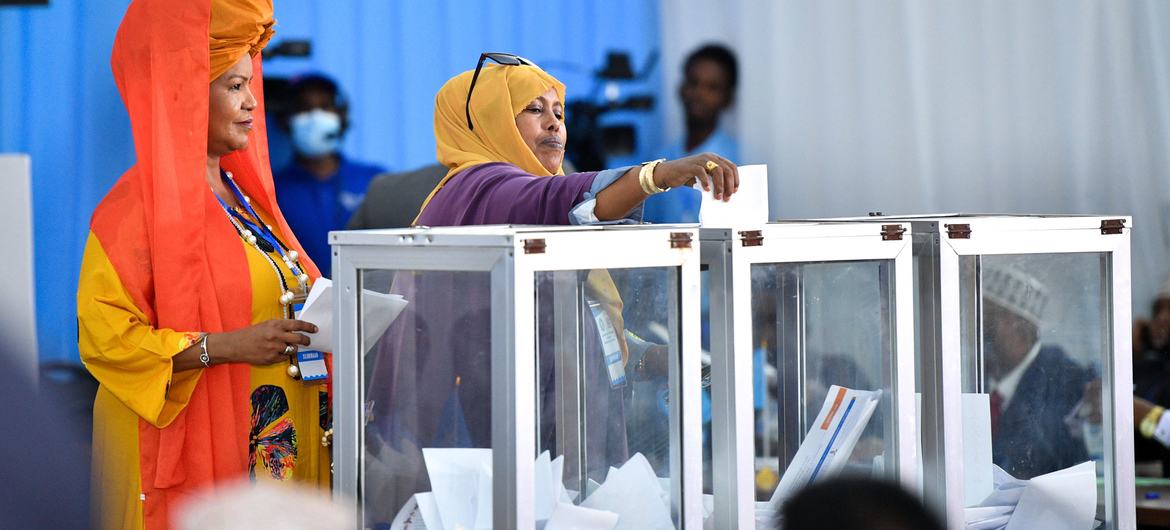
For more than fifty years, Somalia has chosen its leaders through an indirect system: clan elders select delegates, delegates select members of parliament, and parliament selects the president. In 2023, the federal government and most member states agreed to abandon that system in favor of direct, one-person-one-vote elections — a change that, on paper, would make 2026 the first year Somalis cast a direct ballot for national office since 1969.
In practice, the rollout has been anything but smooth. Somalia's electoral commission has staggered the vote by state: Southwest State held local and parliamentary elections in April and May, followed by a presidential vote on May 23. Hirshabelle and Galmudug followed through June and July, and Mogadishu's own municipal elections — widely described as a dry run for the national process — took place over the summer.
But Puntland and Jubaland, two of Somalia's five federal member states, have rejected the new electoral framework entirely, arguing it was imposed without their consent and primarily benefits President Hassan Sheikh Mohamud's re-election prospects. Opposition leaders have made similar claims, noting that while parliament will now be directly elected, a last-minute deal struck in August 2025 preserved indirect, parliamentary selection of the president himself — undercutting the "one person, one vote" promise for the country's top office.
The dispute escalated into what regional analysts now describe as a constitutional crisis. Puntland and Jubaland security forces, along with other opposition-aligned factions, have been reported in direct friction with federal forces in several regions, and South West State's political leadership changed hands amid the unrest in March. The president's own five-year term technically expired in May 2026 without a completed national election to replace him, leaving his legal standing in dispute even as he continues to govern.
Addressing the United Nations General Assembly in September, Mohamud told world leaders that Somalia remained committed to holding its first fully democratic election since 1969, framing the process as proof the country no longer deserved to be treated as incapable of self-governance. He did not announce a firm date for the national presidential vote, and as of this writing it remains unclear what electoral or political arrangement will follow the current transitional period.
For ordinary Somalis, the stakes are practical as much as symbolic: a credible, broadly accepted vote could mark a genuine break from the clan-brokered power-sharing arrangements that have defined the post-1991 state. A contested or incomplete one risks deepening the very federal-versus-state fractures the new system was meant to resolve.