The Somali Monitor
Somalia’s Security Crossroads: Foreign Troop Withdrawals and Political Divisions
Uganda’s announced troop withdrawal, Ethiopia’s possible pullback and reported changes in U.S. military deployments raise serious concerns about Somalia’s security transition. As international military support faces growing uncertainty, persistent Al-Shabaab threats and political divisions between the Federal Government and member states expose the limits of Somalia’s security self-reliance. The developments highlight the urgent need for stronger national security institutions, sustained international cooperation and political reconciliation to prevent further security fragmentation
AUSSOM
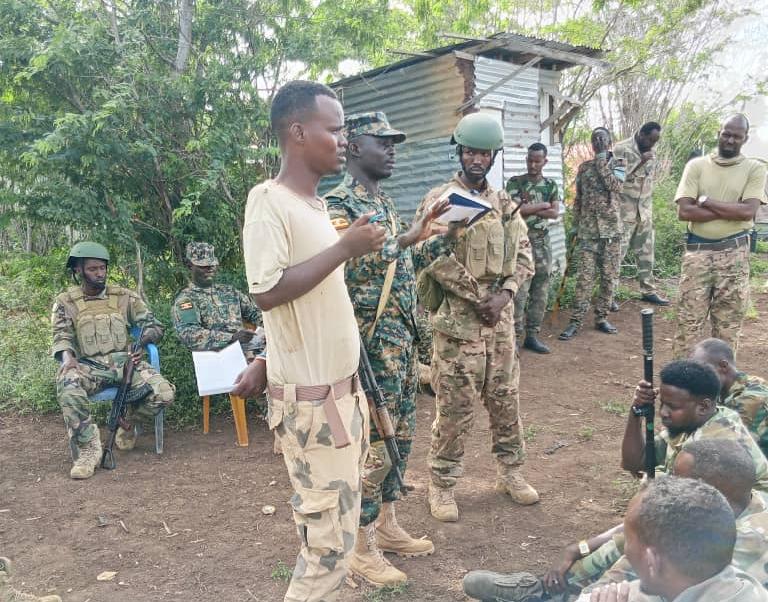
MOGADISHU, Somalia — Uganda's announced troop withdrawal, Ethiopia's possible military pullback and the reported departure of American personnel from Baledogle airfield have exposed growing vulnerabilities in Somalia's security architecture. Nearly two decades after the African Union first deployed troops to stabilize the country, the Federal Government remains dependent on international military assistance to sustain operations against Al-Shabaab and protect strategic territory. Yet these developments coincide with renewed insurgent attacks, unresolved political divisions and financial uncertainty, raising a fundamental question: can Somalia assume greater security responsibilities while its institutions remain dependent on external capabilities and its political leadership struggles to establish a coordinated national security framework?
On October 29, Uganda's Chief of Defence Forces, General Muhoozi Kainerugaba, announced that Ugandan troops had begun withdrawing after nearly twenty years of military engagement. His earlier announcement identified August 1, 2027, as the target for completing the withdrawal. The development followed President Hassan Sheikh Mohamud's visit to Uganda, where he reportedly sought continued military support. Meanwhile, Bloomberg reported that Ethiopia was considering withdrawing more than 3,000 troops amid domestic security pressures, although neither government has formally confirmed the plan. The reported departure of American personnel from Baledogle adds uncertainty over the continuity of specialized military assistance.
The timing is particularly consequential. Under United Nations Security Council Resolution 2809 (2025), the current authorization of the African Union Support and Stabilization Mission in Somalia (AUSSOM) expires on December 31, 2026, seven months before Uganda's announced withdrawal deadline. Although the mandate could be renewed, the difference between these timelines raises questions about how international deployments will be authorized, financed and sustained during 2027. Ethiopia's possible withdrawal has no confirmed timetable, while the reported American departure does not establish a broader U.S. disengagement. These are separate developments, but their cumulative effects could complicate Somalia's security planning.
The emerging situation exposes a longstanding contradiction in Somalia's stabilization model. Since Uganda's initial deployment in 2007, successive African Union missions—AMISOM, ATMIS and AUSSOM—have helped successive Somali governments maintain strategic territory and counter Al-Shabaab. Their contributions have been substantial, often involving significant military sacrifices. Yet nearly two decades of international assistance have not eliminated Somalia's dependence on foreign financing, intelligence, logistics and territorial security. More importantly, the pace of withdrawal may increasingly reflect the financial and domestic priorities of contributing countries rather than Somalia's operational readiness. Transferring military positions without transferring the capabilities required to sustain them risks creating a security transition that exists administratively but remains incomplete operationally.
These vulnerabilities are evident in southern Somalia, where renewed fighting near Burhakaba demonstrates Al-Shabaab's continuing capacity to challenge government forces. Ethiopia's possible withdrawal would be particularly consequential in Bay, Bakool and Hiiraan, where its troops have supported territorial security. A poorly coordinated reduction could weaken military positions and strategic transport corridors, potentially allowing insurgents to exploit gaps between departing international forces and incoming Somali units. The consequences could extend to civilian protection, humanitarian access and displacement, particularly in South West State and Lower Shabelle.
However, Somalia's vulnerability is not exclusively military. Political disagreements involving Puntland, Jubbaland and South West State over constitutional authority, electoral arrangements and regional administration have strained cooperation between federal and regional institutions. At times, these confrontations have involved competing security deployments, potentially diverting military resources from counterinsurgency operations. This creates a fundamental contradiction: Somalia requires greater national security coordination precisely when its political institutions remain divided over authority and command. Even a well-equipped national army may struggle to maintain territorial security where political disagreements influence military deployments and regional security cooperation.
The approaching 2027 parliamentary and presidential elections add further pressure. If constitutional and electoral disputes remain unresolved, the Federal Government could face simultaneous demands to manage political competition, protect strategic institutions and sustain counterinsurgency operations with fewer international resources. The danger is not necessarily an immediate collapse of government authority, but the gradual weakening of security coordination as limited military resources become stretched between competing priorities.
For President Hassan Sheikh Mohamud's administration, the immediate option is to negotiate a phased extension of international military assistance, particularly with Uganda and other troop-contributing countries. Such arrangements could provide additional time to prepare Somali forces but would remain dependent on international financing and political commitments. A second option is to deepen bilateral security cooperation with Turkey, the United States and other partners, particularly in training, intelligence, aerial support and logistics. However, specialized assistance cannot necessarily replace the extensive territorial presence of African Union forces or resolve the institutional weaknesses affecting Somalia's security transition.
A more sustainable response would require strengthening national security institutions through reliable financing, unified command structures and coordinated arrangements with federal member states. Yet increasing troop numbers without addressing political fragmentation would offer limited protection. Political reconciliation may therefore become the Federal Government's most consequential domestic option. Renewed engagement with Puntland, Jubbaland, South West State and opposition leaders could reduce competing security deployments, strengthen intelligence sharing and establish clearer responsibilities for territorial protection. Such cooperation would not replace military capabilities but could improve the effectiveness of existing forces by reducing the political divisions that undermine their operations.
If international extensions prove unavailable, bilateral assistance remains insufficient and political reconciliation fails, Mogadishu may ultimately be compelled to adopt a narrower security strategy, concentrating available forces around major cities, government institutions and strategic transport corridors. Although this could protect priority locations, it would risk reducing government presence in rural areas and creating opportunities for Al-Shabaab to expand its influence. The consequences could include renewed displacement, disrupted trade and restricted humanitarian access, particularly in regions already experiencing severe insecurity.
Ultimately, Uganda's announced withdrawal, Ethiopia's possible pullback and the reported changes in American military deployments represent a critical test of Somalia's security transition. The issue is not whether international troops can remain indefinitely, but whether nearly two decades of military assistance have produced institutions capable of sustaining security as external commitments decline.
For the Federal Government, the immediate fallback may be extended international assistance and stronger bilateral military partnerships. But its most consequential domestic option is political reconciliation, enabling Somalia's security institutions to operate through coordinated national and regional arrangements rather than competing political interests. Without such a settlement, foreign troop withdrawals risk exposing not only Somalia's continuing military dependence, but the deeper consequences of a fragmented federal system unable to organize its security resources around a common national objective.