The Somali Monitor
Somalia’s El Niño Flood Threat: Early Warnings and the Limits of Preparedness
Somalia’s anticipated Deyr floods threaten further displacement and worsening humanitarian needs, exposing the persistent gap between early warnings, adequate preparedness and effective action to prevent recurring crises.
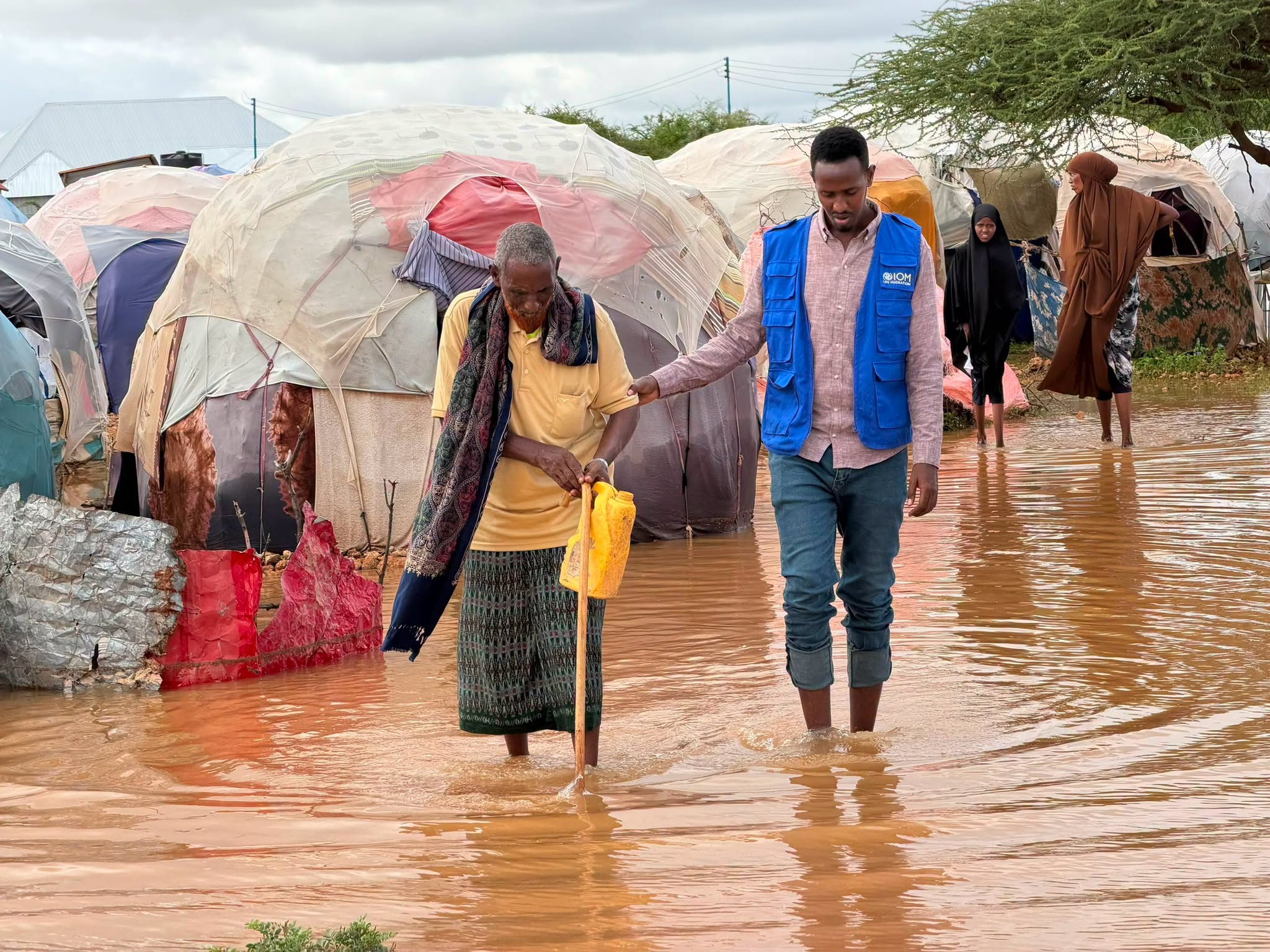
Photo courtesy of IOM Somalia, Baidoa.
MOGADISHU, Somalia — Somalia is confronting another potentially devastating climate emergency as El Niño-related conditions raise the risk of widespread flooding during the October–December 2026 Deyr rainy season. With millions already facing acute food insecurity, recurrent displacement and declining humanitarian assistance, the anticipated floods threaten to deepen an existing crisis. Recent warnings from the Food and Agriculture Organization (FAO), International Organization for Migration (IOM) and other UN agencies indicate that heavy rainfall, rising rivers and localized flooding are already affecting vulnerable communities. Yet the emerging emergency exposes a more fundamental challenge: Somalia’s humanitarian system has become increasingly capable of forecasting disasters but remains far less effective at translating early warnings into timely financing, preventive action and lasting protection. The central concern is therefore not simply the severity of the anticipated flooding, but why predictable climate shocks continue to produce repeated displacement despite decades of humanitarian intervention and improvements in early-warning systems.
The warning was evident well before the rains began. On September 1, FAO cautioned that strong El Niño conditions could bring exceptionally heavy Deyr rainfall, with forecasts indicating a greater than 90 percent probability of above-normal precipitation in parts of central and southern Somalia. Some areas were projected to receive more than 400 millimetres of rainfall, raising concerns about riverine and flash flooding along the Jubba and Shabelle basins. FAO drew comparisons with conditions preceding the major floods of 1997 and 2023, while cautioning that similar climate signals do not necessarily produce disasters of equivalent magnitude. The distinction is important: rainfall alone does not determine humanitarian consequences. Flood severity also depends on river management, drainage infrastructure, settlement patterns and the ability of vulnerable households to act before floodwaters arrive. (FAO Somalia, September 1, 2026)
By late October, the threat had begun moving beyond seasonal projections. In its October 21 warning, IOM reported early flooding impacts, identifying Baidoa, Dollow, Jowhar and other vulnerable locations as areas of concern. Heavy rainfall had reportedly damaged homes and forced some families to move in Baidoa, while rising water levels along the Jubba and Shabelle rivers threatened settlements, farmland and transport routes. FAO's October 23 reporting also identified standing water and damaged roads around Gaalkacyo. These developments are particularly concerning in towns hosting large displaced populations, where overcrowded settlements, inadequate drainage and insecure housing increase exposure to even localized flooding. (IOM, October 21, 2026; FAO Somalia, October 23, 2026)
The scale of potential displacement is substantial. IOM's October assessment, drawing on projections developed with the Danish Refugee Council, estimated that approximately 874,319 people could be displaced by different hazards between October and December, with flooding accounting for around 92 percent of anticipated movements. Beletweyne and Gaalkacyo were among the identified hotspots. Although these are projections rather than recorded displacement figures, they demonstrate the magnitude of exposure. For families already displaced by drought, conflict or previous flooding, another movement can mean further losses of shelter, livelihoods and access to essential services. Repeated displacement progressively reduces households' capacity to recover, making subsequent climate shocks more damaging.
The anticipated flooding also coincides with an exceptionally severe food security crisis. According to the September 2026 Integrated Food Security Phase Classification (IPC) analysis, approximately 5.4 million people were projected to face Crisis-level food insecurity or worse between October and December, including around 1.5 million in Emergency. The assessment further projected that 1.92 million children under five would require treatment for acute malnutrition between July 2026 and June 2027, including approximately 433,000 with severe acute malnutrition. Flooding threatens to compound these vulnerabilities through crop losses, disrupted markets, contaminated water sources and restricted humanitarian access. In Baidoa, where displaced communities already face exceptionally severe food insecurity, additional flooding could damage temporary shelters, interrupt nutrition services and trigger further displacement. (FAO, WFP and UNICEF, September 2026)
The greatest concern, however, is the gap between early warning and the resources available to act. IOM's October 21 appeal identified a requirement of approximately US$16.62 million to support preparedness and emergency assistance for more than 517,000 people, with only 14.4 percent reportedly secured. This shortfall limits the capacity to prepare evacuation sites, provide emergency shelter and protect water, sanitation and healthcare services before flooding forces communities to move. FAO, WFP and UNICEF have similarly warned that insufficient funding could interrupt food assistance and malnutrition treatment precisely when flooded roads make vulnerable populations harder to reach. The problem is therefore not the absence of information about the approaching emergency, but the persistent difficulty of translating forecasts into adequately financed preventive action. (IOM, October 21, 2026)
Nevertheless, recent UN-supported initiatives demonstrate progress in anticipatory action. FAO's Somalia Water and Land Information Management programme has been mapping flood-prone settlements, vulnerable riverbanks and evacuation routes. In Jowhar, FAO reported on October 23 that early-warning messages had reached more than 274,000 people, while 6,325 households were registered for anticipatory cash assistance. These interventions represent an important shift from responding after displacement occurs toward protecting communities beforehand. However, warnings and registration alone cannot guarantee protection without timely financial assistance, accessible evacuation options and secure alternative settlements. The effectiveness of anticipatory action must therefore be measured by whether vulnerable households can act on warnings, not simply by the number of people receiving them. (FAO Somalia, October 23, 2026)
The developing emergency further illustrates why humanitarian preparedness cannot be separated from long-term development and governance. Effective flood protection along the Jubba and Shabelle rivers requires sustained investment in water management, drainage, agricultural infrastructure and safer settlements. Initiatives such as the Jowhar Offstream Storage Programme and the UK-supported RESTORE project demonstrate efforts to integrate early warning, flood protection and livelihood resilience. Such investments are particularly important because above-normal rainfall can also replenish groundwater, regenerate pasture and support agricultural recovery in drought-affected areas. Whether communities benefit from rainfall or suffer further displacement depends significantly on infrastructure, secure livelihoods and institutional preparedness. (FAO Somalia, RESTORE funding announcement)
Somalia's approaching Deyr emergency ultimately exposes a recurring contradiction in its humanitarian response. UN agencies have identified high-risk locations, projected displacement and developed preparedness measures before the season reaches its peak, yet limited financing and structural vulnerabilities continue to threaten their effectiveness. The problem is not necessarily a failure to anticipate disasters, but the persistent inability to translate available knowledge into protection at the scale required. For displaced households living in insecure settlements, early warnings offer limited protection when families lack the resources, safe land or institutional support necessary to relocate and preserve their livelihoods.
As the rains progress, Somalia's humanitarian preparedness will be measured not only by forecasting flood levels, damaged infrastructure or the number of people displaced, but by how effectively foreseeable losses and consequences are prevented, and managed. The country's recurring cycle of drought, flooding and displacement demonstrates that climate hazards alone do not determine the scale of human suffering. Governance, infrastructure, social protection and timely assistance shape whether exposed communities withstand a shock or lose the means to recover. The real test of Somalia's humanitarian system in 2026 is therefore whether it can move beyond predicting and repeatedly responding to emergencies toward preventing avoidable displacement and addressing the vulnerabilities that make each successive climate shock another humanitarian crisis.