
The Somali Monitor
Saudi Arabia, Pakistan and Türkiye Activate Mecca Defence Pact Amid Houthi Attacks
Saudi Arabia, Pakistan and Türkiye have activated the Mecca Defence Pact amid escalating Houthi attacks, potentially reshaping Red Sea security. For Somalia, the alliance presents opportunities for maritime security cooperation but also risks deeper geopolitical competition and regional entanglement
SOMALI MONITOR | HORN & INTERNATIONAL AFFAIRS | OCTOBER 11, 2026
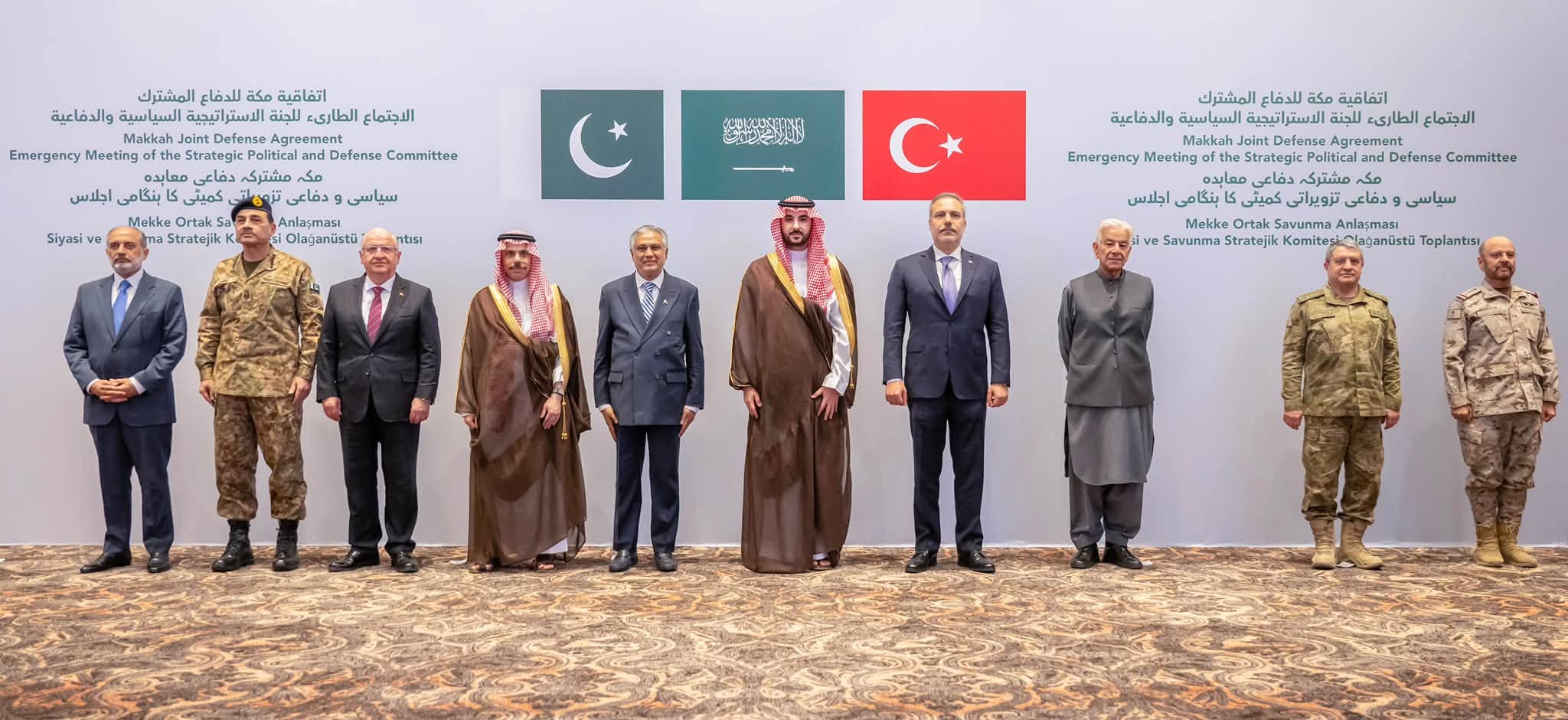
RIYADH, Saudi Arabia — Saudi Arabia, Pakistan and Türkiye have agreed to immediately implement their collective defence commitments under the Mecca Defence Alliance, paving the way for the rapid deployment of agreed military personnel and capabilities to the Kingdom. According to Al Jazeera, the decision was announced on October 5, 2026, following an emergency meeting of the alliance's Strategic Political and Defence Committee in Riyadh, amid escalating attacks on Saudi territory by Yemen's Iran-aligned Houthi movement.
In a joint statement, the three countries reaffirmed that the security of each member forms an integral part of their collective security, rejecting attacks or threats against Saudi Arabia's sovereignty, territorial integrity and holy sites. As reported by Al Arabiya, Saudi Defence Minister Prince Khalid bin Salman confirmed the agreement to activate collective deterrence measures, emphasizing the three countries' solidarity in responding to attacks against the Kingdom. The statement signals a shift from diplomatic security assurances towards coordinated military preparedness, although it does not establish that Pakistan and Türkiye have formally entered the war against the Houthis. (Sources: Al Arabiya; Al Jazeera)
According to Nikkei Asia, the emergency meeting brought together foreign and defence ministers, military commanders and senior officials from the three countries. The parties agreed to begin implementing their collective defence commitments and preparing agreed forces and military capabilities for rapid deployment to Saudi Arabia, subject to established procedures and national legislation. The distinction is important: the agreement authorizes military preparations, but the precise scale, composition and timing of actual deployments remain unclear. (Source: Nikkei Asia)
From Bilateral Defence Cooperation to a Trilateral Security Alliance
The Mecca Joint Defence Agreement, signed on August 7, 2026, by Saudi Crown Prince Mohammed bin Salman, Turkish President Recep Tayyip Erdoğan and Pakistani Prime Minister Shehbaz Sharif, establishes a collective defence framework under which an armed attack against one member is treated as an attack against all three. The arrangement draws comparisons with NATO's Article 5, although its operational structures and obligations remain distinct. It also builds upon the September 2025 Saudi-Pakistani defence agreement, expanding existing security cooperation into a broader trilateral arrangement. (Sources: Saudi Government; Foreign Policy Journal)
The alliance has also begun developing institutional structures, including the reported appointment of retired Pakistani Lieutenant General Nauman Mahmood as its first secretary-general for a three-year term, with headquarters in Riyadh. This institutionalization matters because collective defence depends not simply on military resources, but on the capacity to coordinate political decisions, intelligence, operational planning and command arrangements. The October activation therefore represents an initial test of whether the agreement can function as an operational security mechanism rather than remain a declaration of strategic solidarity.
Escalating Houthi Attacks and the Alliance's First Military Test
The activation comes amid renewed fighting in Yemen and increasingly direct attacks against Saudi infrastructure. According to Reuters, Saudi-backed Yemeni government forces launched an offensive around the strategically important Bab al-Mandab Strait on October 5, seeking to regain territory from the Houthis. The confrontation has subsequently intensified, exposing Saudi Arabia to retaliatory missile and drone attacks while raising concerns about the security of international shipping through the Red Sea (Reuters 7 Oct).
The escalation became particularly serious on October 10, when a Houthi missile struck Riyadh's King Khalid International Airport, killing at least 12 people and injuring more than 300. The Associated Press reported that another projectile struck the airport on October 11, bringing the reported death toll to 13. These attacks demonstrate the difficulty of protecting critical civilian infrastructure and increase pressure on Riyadh to translate its collective defence arrangements into effective military support (AP News 11 Oct).
Yet the alliance's operational commitments remain subject to important limitations. According to the Financial Times, Türkiye's deployment of combat troops requires parliamentary ratification, while Pakistan has not publicly specified the full scope of its military contribution. Consequently, the activation of collective defence should not be interpreted as confirmation that all three countries have entered direct combat operations against the Houthis.
Collective Military Strength and the Changing Regional Security Order
The three countries possess complementary strategic capabilities. Saudi Arabia contributes financial resources and regional influence; Pakistan brings substantial conventional forces and nuclear-weapons capabilities; and Türkiye provides an expanding defence industry, advanced unmanned systems and NATO-related operational experience. However, as Al Jazeera's August 8 analysis observed, the alliance's immediate value may lie more in strengthening deterrence and creating uncertainty for potential adversaries than in establishing a fully integrated military command (Al Jazeera Aug)
The arrangement also reflects a broader reconsideration of regional security dependence. Although Saudi Arabia maintains extensive defence relations with the United States, the Mecca Agreement creates an additional framework through which Riyadh can mobilize support from influential regional partners. For Pakistan and Türkiye, participation also expands their strategic influence across the Gulf and Red Sea. Nevertheless, their different relationships with Iran, the United States and neighbouring countries could constrain the extent of collective military action ((Al Jazeera Aug).
For Somalia and the wider Horn of Africa, the implications are particularly consequential. Escalation around Yemen threatens the Bab al-Mandab Strait, linking the Red Sea with the Gulf of Aden, while Türkiye's established military relationship with Somalia connects the emerging alliance to an already contested regional security environment. The agreement could strengthen maritime deterrence, but prolonged confrontation could also intensify external military competition and complicate the strategic calculations of countries along the Somali coast.
Ultimately, the activation of the Mecca Defence Alliance represents an important test of whether collective security cooperation can deter aggression without widening the conflict it seeks to contain. The three governments have demonstrated political solidarity and agreed to operational preparations, but the decisive questions concern actual deployments, command coordination and the limits of their military commitments. The agreement's longer-term significance will depend on whether it contributes to regional stability or draws additional powers into the Saudi-Houthi confrontation.