
The Somali Monitor
Mogadishu’s Deadly Evictions: Land Grabbing, Political Power and Governance Under Scrutiny
At least, three citizens were reportedly confirmed dead in Warlaalis area during forced evictions in Mogadishu’s Daynile district, Mogadisho. While this is not the first time the government has engaged in forceful evictions, it now appears escalated, intensifying opposition accusations against President Hassan Sheikh Mohamud’s administration over alleged land grabbing and the enrichment of politically connected business interests. However, the incident exposes wider concerns about public land transactions, the use of security forces, institutional accountability and the continued vulnerability of displaced communities amid Somalia’s growing political tensions
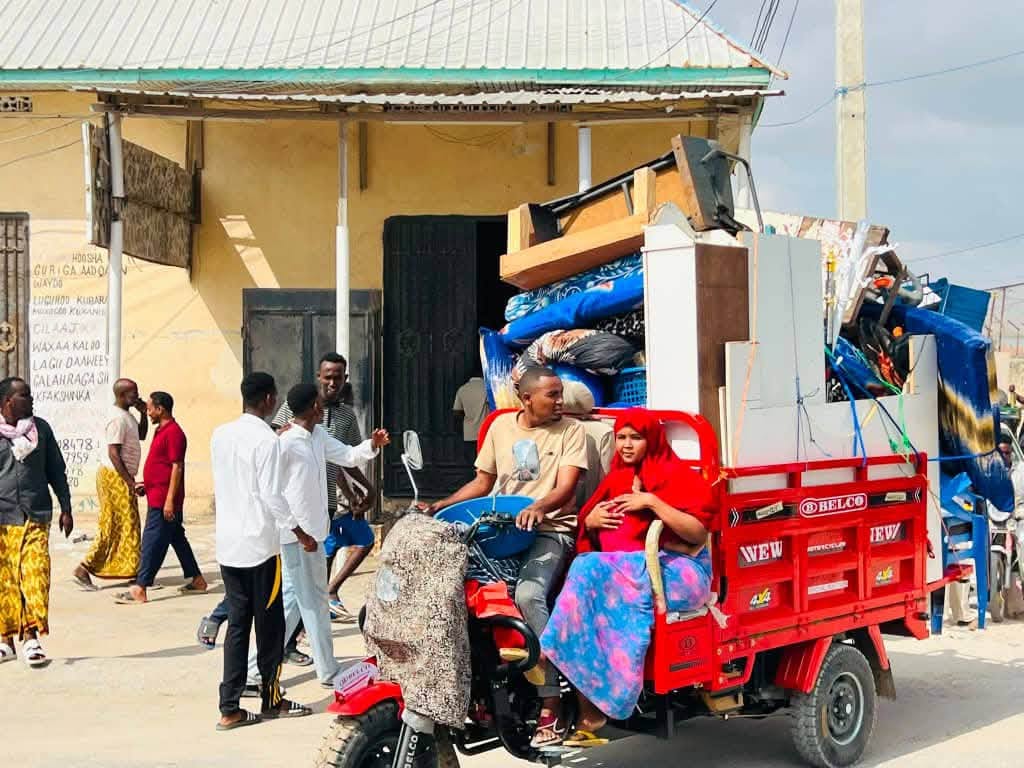
Photo: Courtesy of Warlalis Media Outlets - 8 November 2026
MOGADISHU — The reported killing of civilians during a government-backed eviction operation in Mogadishu's Daynile district on November 8 has brought the capital's longstanding land disputes into a new political confrontation. What began as the demolition of homes in the Warlaaliska neighbourhood ended in deadly violence, raising questions about the management of public property, the deployment of security forces against protesting residents and allegations that valuable government land is being transferred to politically connected private interests.
According to local sources obtained by the Somali Monitor, security forces opened fire as residents resisted the demolition of their homes. Former Prime Minister Hassan Ali Khaire reported three civilian deaths and several injuries, while other local accounts put the death toll at two. No official casualty figure or detailed government explanation was available in the reporting reviewed. Residents alleged that the land was being cleared for a politically connected businessman, although neither the alleged transaction nor its beneficiary has been independently established.
The incident reflects a wider crisis in Mogadishu's land administration, where commercial development, rising property values and disputed ownership increasingly place vulnerable communities in conflict with public authorities. According to the European Union Agency for Asylum's 2026 assessment, 143,548 people were evicted in Mogadishu during 2025, including 63,132 from government properties. Recorded protests against evictions increased from eight between April 2024 and March 2025 to 78 during the following twelve months, illustrating growing public resistance to land enforcement operations.
Mogadishu's expanding property market has made public land an increasingly valuable economic and political resource. Decisions over its recovery, allocation or sale can generate substantial private benefits while determining whether established communities retain their homes. Where ownership records, valuations and transaction beneficiaries are not publicly disclosed, such decisions become vulnerable to allegations of favouritism and political patronage. The central question is therefore not whether the government has the authority to reclaim public land, but whether that authority is exercised lawfully, whose interests it serves and how any resulting revenues are accounted for.
These concerns have become central to Somalia's opposition politics. Former President Sharif Sheikh Ahmed, former Prime Minister Khaire and other opposition figures have repeatedly challenged the administration over disputed public property transactions. The Heritage Institute for Policy Studies documented concerns over transfers of government assets, including properties associated with public institutions, while more than 90 federal parliamentarians reportedly objected to aspects of the transactions. The controversy has consequently developed beyond individual eviction disputes into a broader confrontation over executive authority, public resources and institutional oversight.
The November 8 killings have intensified these accusations. In his statement on X, Khaire condemned the use of force, reported three civilian deaths and held the government responsible. He accused President Hassan Sheikh's administration of facilitating land grabbing and demolitions that benefit politically connected business interests. His allegations connect the Daynile incident to longstanding opposition claims that public property is being used to enrich influential private individuals at the expense of ordinary residents. However, neither the alleged private beneficiaries nor claims that the president personally authorised the shootings have been independently established.
For opposition politicians, the eviction crisis has become a measure of what they describe as weakening governance under the current administration. Their criticism concerns not only disputed land transactions but also the perceived use of state institutions and security forces to enforce politically sensitive decisions without adequate judicial or parliamentary scrutiny. These allegations have acquired greater significance amid continuing disagreements over constitutional amendments, federal relations and the anticipated 2027 elections. Although political accusations are not evidence of wrongdoing, repeated confrontations involving public property and security forces raise legitimate questions about institutional accountability.
The controversy also reflects an earlier pattern of confrontation. In September 2025, a forced eviction dispute in Mogadishu's Siinay neighbourhood escalated following a visit by opposition leaders, including Sheikh Sharif. The Inter-Parliamentary Union subsequently recorded allegations that security personnel fired on an opposition delegation, demonstrating how disputes over land enforcement can become intertwined with wider political tensions. The recurrence of such incidents suggests that the absence of effective dispute resolution mechanisms may increasingly turn administrative decisions into security and political crises.
The financial implications are equally significant. Somalia continues to face limited domestic revenue, substantial fiscal pressures and dependence on external assistance. Public land therefore represents a potentially important source of government income. Where state assets are sold or leased, authorities should disclose the legal authorisation, valuation, beneficiaries and destination of the proceeds. Opposition allegations that land transactions benefit political networks or could support electoral activities require investigation through financial records. No verified evidence currently establishes that proceeds from the disputed Daynile property have financed political campaigns, but the absence of accessible transaction information makes independent scrutiny difficult.
The crisis also exposes contradictions in Somalia's humanitarian and development investments. For more than a decade, government institutions and international partners have financed displacement responses, housing and land governance programmes, urban development and durable solutions initiatives. Yet thousands of internally displaced and low-income households in Mogadishu remain without secure tenure, exposing them to repeated displacement. In some settlements, humanitarian investments in shelter, water and infrastructure improve living conditions while potentially increasing the commercial value of surrounding land. Without enforceable protection, communities risk losing the benefits of investments intended to support their recovery.
This raises a fundamental question about institutional effectiveness. Somalia has developed policies, coordination mechanisms and donor-supported programmes intended to address displacement, but these have not consistently translated into protection against forced evictions. Although the November 8 incident does not establish that all affected residents were internally displaced people, it occurred within a wider pattern of insecure housing that continues to undermine the credibility of land governance and durable solutions institutions.
The legal obligations of the state remain central. Both Somalia's 2012 Provisional Constitution and the 2026 completed Constitution all protects property rights, while the 2019 National Eviction Guidelines establish safeguards concerning lawful procedures, consultation and protection against arbitrary displacement. Even where authorities have a legitimate claim to public property, the use of firearms during an eviction requires separate scrutiny. An independent investigation should establish who authorised the demolition, which security units were deployed, what orders were issued and whether the use of lethal force complied with applicable law.
The incident also carries broader community risks. In Mogadishu, disputed land claims frequently intersect with traditional authority, clan representation and perceptions of unequal treatment. Where communities believe government decisions favour politically influential individuals, property disputes can develop into wider grievances against public institutions. The use of armed enforcement in such circumstances risks deepening distrust and creating further confrontation between residents and the authorities.
For President Hassan Sheikh's administration, the Daynile incident presents a test of institutional accountability and the use of force for citizens. The government must demonstrate that public property decisions are lawful, affected residents have access to remedies and security forces are accountable for their conduct. Parliament and judicial institutions must also be able to scrutinise disputed transactions independently, while opposition politicians bear responsibility for substantiating allegations of corruption and political favouritism.
Ultimately, the November 8 killings represent more than another violent episode in Mogadishu's continuing eviction crisis. They expose the intersection of public land, private economic interests, political competition and weaknesses in institutional accountability. The central question is not simply who owns the disputed property, but how decisions over land are made, who benefits from them and why a dispute involving residential homes reached the point where civilians reportedly lost their lives. As Somalia approaches another contested electoral transition, failure to investigate the deaths, disclose the legal basis for the demolition and clarify the disputed property's ownership risks reinforcing opposition claims of weakening governance. For the affected families, however, the immediate demands remain justice, protection and accountability for the loss of lives and homes.