The Somali Monitor
Liiban’s Presidency: Galmudug’s Power Shift and the 2027 Federal Elections
Galmudug’s political transition strengthens Villa Somalia’s influence ahead of the contested 2027 elections, while opposition recognition reveals shifting alliances and deeper questions over electoral legitimacy and federal autonomy.
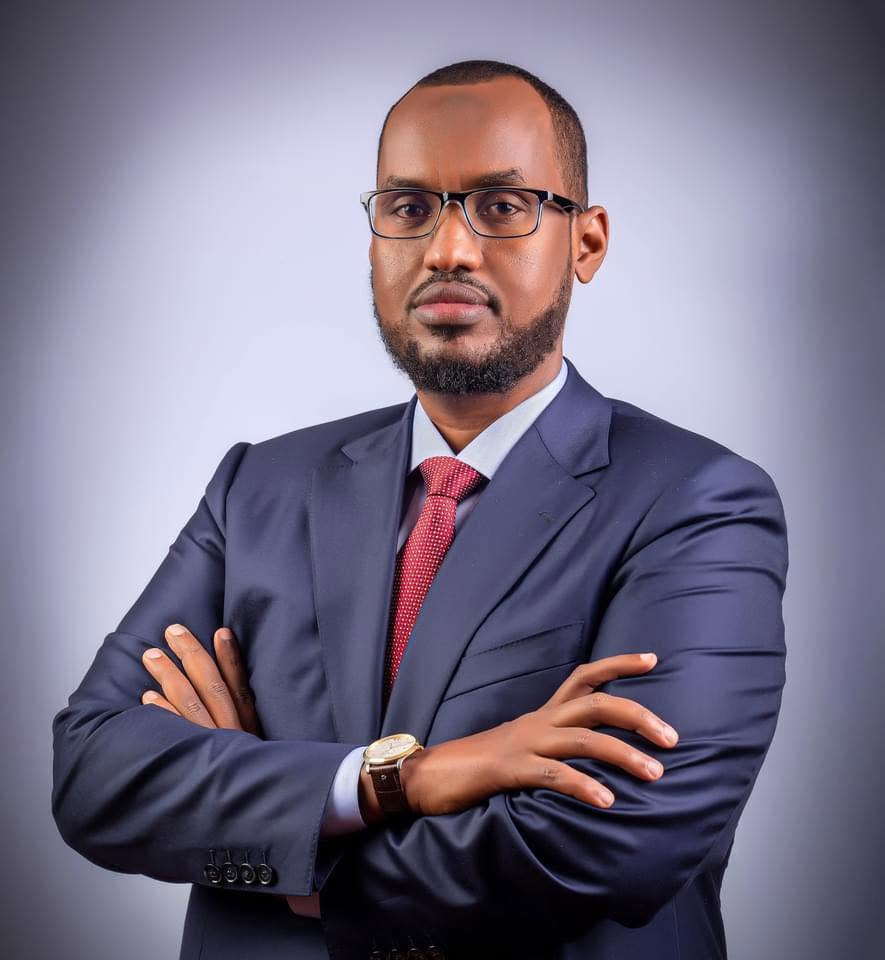
Photo courtesy of Liibaan's Official Facebook page.
DHUSAMAREB, Somalia — The election of Liibaan Ahmed Hassan, widely known as Liibaan Shuluq, as Galmudug’s president on 22 October 2026 represents more than a regional leadership transition. It consolidates the influence of President Hassan Sheikh Mohamud’s Justice and Solidarity Party (JSP) in a strategically important federal member state, while exposing the complex political calculations shaping Somalia’s approaching 2027 elections. Particularly revealing is the reported willingness of prominent opposition figures to congratulate Liibaan despite their continued objections to the federal government’s constitutional amendments and electoral agenda. Liibana’s election therefore raises a wider question: whether Somalia’s political actors recognise regional electoral outcomes according to consistent constitutional principles, or increasingly through the interests and alliances that determine their influence over national politics.
Liibaan secured 72 votes in Galmudug’s 89-member parliament, defeating Abdulkadir Abdullahi Diriye of the Puntland’s SINCAD political organisation, who received 14 votes, with three ballots invalid. His victory followed JSP’s capture of 67 parliamentary seats and all three parliamentary leadership positions. Abdiwelli Ibrahim Garyare, also aligned with JSP, was subsequently elected vice president. Significantly, Liibaan received five more votes than JSP’s parliamentary representation, indicating support beyond the party’s own elected members. The outcome gives the governing party commanding influence over Galmudug’s executive and legislature, creating an important political advantage for Villa Somalia while placing greater responsibility on regional institutions to maintain effective oversight and political accountability. (Goobjoog, 22 October 2026; Hiiraan Online, 19 October 2026.)
The political significance of this consolidation becomes clearer when examined against the circumstances surrounding Galmudug’s electoral process. The Supreme Court annulled the original 30 July parliamentary and local elections on 24 August after finding substantial constitutional and procedural irregularities. A rerun was conducted on 30 September, but Towfiiq, the political organisation whose legal challenge had prompted the annulment, was excluded from the new contest. Electoral authorities cited participation requirements, while Towfiiq disputed the decision, and nobody knows what this may mean in the coming future. Although the Supreme Court subsequently certified the rerun results after the legal challenge period expired, the sequence illustrates a fundamental tension between procedural legality and political inclusion. Judicial intervention demonstrated the possibility of institutional accountability, but the exclusion of a successful complainant raised unresolved questions about the conditions of electoral competition. Direct voting, by itself, cannot guarantee political legitimacy unless electoral institutions also provide credible opportunities for participation and independent scrutiny. (Hiiraan Online, 14 October 2026.)
Liibaan’s political emergence also reflects the relationship between commercial networks, community influence and state-building in Somalia. His reported business interests in trade (Khat/Miraa), logistics and infrastructure, alongside involvement in community security mobilisation, suggest experience navigating the economic and political networks that shape governance in central Somalia. Such connections may prove useful in mobilising resources and negotiating local interests, particularly where formal institutions remain weak. Yet the transition from commercial and community influence, to public leadership presents a different challenge: building institutions that operate beyond personal relationships, distribute resources transparently and accommodate competing constituencies. His presidency will ultimately be assessed through security, reconciliation, service delivery and the capacity to strengthen Galmudug’s administrative institutions rather than through parliamentary numbers alone.
Perhaps the most politically revealing development, however, is the reported response of opposition leaders. Former Prime Minister Mohamed Hussein Roble, former Galmudug President Abdikarim Hussein Guled and opposition parliamentarian Abdirahman Odowaa were reportedly among those who congratulated Liibaan. Their responses are significant because recognition of his regional leadership does not necessarily imply endorsement of the federal government’s constitutional reforms or national electoral timetable. They also invite a more strategic interpretation. Political figures with established constituencies and networks in Galmudug may have reasons to preserve constructive relations with its incoming president, particularly if negotiations eventually produce a return to indirect federal elections. Under such arrangements, regional administrations have historically exercised considerable influence over parliamentary selection. Maintaining access to Liibaan’s administration could therefore protect political relationships and future electoral opportunities without requiring opposition figures to abandon their disagreements with Villa Somalia.
This pattern extends beyond Galmudug and reflects a recurring feature of Somalia’s federal politics: electoral recognition often intersects with political alliances and institutional interests. Opposition figures recognised Ahmed Madobe’s disputed 2024 re-election in Jubbaland, while other national political actors congratulated Abdiaziz Laftagareen following his controversial March 2026 re-election in Southwest State. President Hassan Sheikh Mohamud himself supported Madobe’s disputed 2019 re-election while in opposition to the Farmaajo administration, before his government rejected Jubbaland’s subsequent electoral process in 2024. These cases are not procedurally identical, and political recognition does not necessarily establish legal validity. Nevertheless, the contrasting responses illustrate how positions on regional elections can change as political relationships and institutional interests evolve. The central issue is not whether politicians may maintain different alliances, but whether the constitutional standards used to assess elections remain consistent when those alliances change. (The EastAfrican, November 2024; Reuters, 30 March 2026.)
These political calculations are increasingly consequential as Somalia approaches its contested national electoral transition. Puntland and Jubbaland have challenged aspects of the federal government’s constitutional and electoral agenda, while opposition groups question the process through which constitutional amendments were adopted and the authority underpinning the proposed transition. The federal government maintains that its reforms provide a framework for replacing indirect political selection with more representative elections based on direct voting and political parties. The disagreement, however, extends beyond choosing between electoral systems. It concerns who possesses the constitutional authority to determine the rules, whether federal member states have been adequately consulted and what safeguards prevent electoral reforms from concentrating political power. Recognition of a regional president, therefore, cannot automatically be interpreted as consent to the national constitutional framework. (Garowe Online, 15 October 2026.)
For Villa Somalia, JSP’s consolidation in Galmudug offers a significant opportunity for political coordination ahead of the announced parliamentary elections on 15 April 2027 and presidential election on 15 May. A cooperative regional administration could support electoral preparations, security arrangements and implementation of federal policies. Yet Galmudug’s alignment cannot resolve the wider legitimacy dispute while other federal member states and opposition groups reject the electoral framework. Moreover, if negotiations restore indirect elections, control of regional political institutions could acquire renewed significance in the selection of federal representatives. This creates an important strategic uncertainty: the same regional political consolidation that strengthens the federal government’s preferred direct-election framework may also become influential under an alternative negotiated electoral settlement. (Hiiraan Online, 15 October 2026; Garowe Online, 15 October 2026.)
Galmudug’s new leadership consequently faces a delicate federal balancing act. Political cooperation with Mogadishu could strengthen access to security assistance, development resources and administrative support, but excessive dependence on the governing party risks weakening perceptions of regional institutional autonomy. Somalia’s federal system is intended to accommodate distinct territorial interests, not simply reproduce national party alignments within state administrations. Liibaan will therefore need to demonstrate that cooperation with President Mohamud can coexist with independent representation of Galmudug’s priorities, particularly in negotiations over security responsibilities, fiscal arrangements and constitutional powers. His willingness to engage opposition constituencies and communities outside JSP may become an important measure of whether political consolidation translates into broader institutional legitimacy.
Beyond electoral calculations, Galmudug faces immediate governance challenges that cannot be resolved through party dominance. Al-Shabaab’s continuing threat in central Somalia requires sustained security coordination, accountable local forces and functioning district administrations. Reconciliation, economic recovery and public services will be equally important to maintaining confidence in the new leadership. A strong parliamentary majority may accelerate government decisions, but without meaningful oversight and inclusive administration, it could also narrow the political space necessary for durable state-building. The central test is whether Liibaan can convert the political authority acquired through the election into institutions capable of serving communities beyond the coalition that brought him to power.
Ultimately, Liibaan’s presidency illustrates the intersection of regional power, national electoral competition and Somalia’s unresolved constitutional settlement. His election strengthens JSP’s position in Galmudug, but opposition congratulations reveal that political relationships remain more fluid than the confrontation between Villa Somalia and its opponents might suggest. As the country approaches 2027, the deeper challenge is whether Somalia’s political class can move beyond recognising elections according to shifting alliances and establish constitutional and electoral principles that apply consistently across federal member states. Galmudug’s transition will be consequential not simply because of who now governs it, but because of what its experience reveals about the future relationship between political competition, federal autonomy and national legitimacy.