
The Somali Monitor
Can Sheikh Sharif's Petition Overturn Somalia's 2026 Constitution, without a Constitutional Court
Sheikh Sharif’s petition challenging Somalia’s 2026 constitutional amendments places the Supreme Court at the centre of a major constitutional dispute. With the constitutionally designated Constitutional Court never established, the case tests whether the Supreme Court can lawfully review the amendments, uphold constitutional limits and help resolve the country’s deepening political and electoral uncertainty
Himilo Qaran
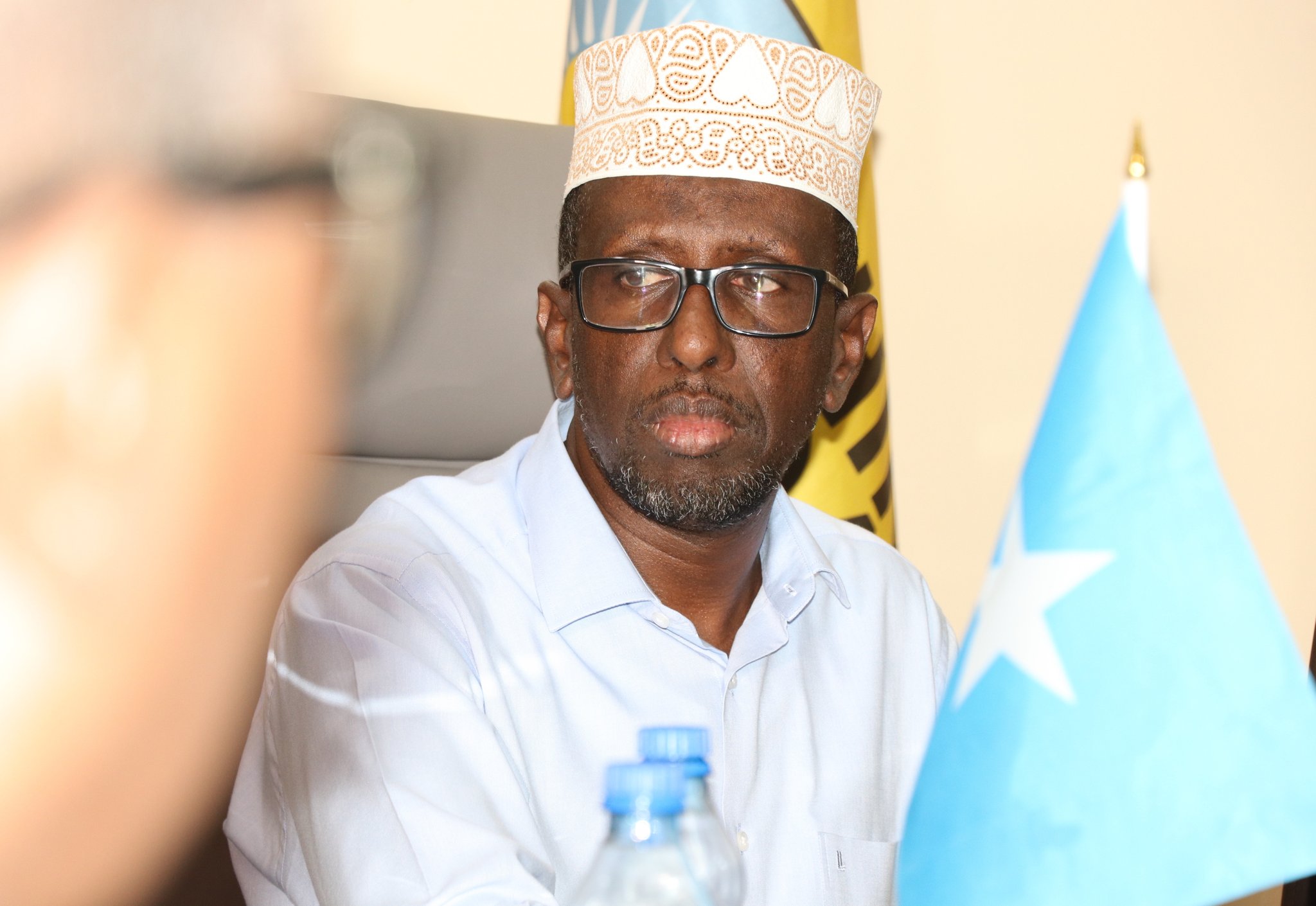
MOGADISHU, Somalia — Former President Sharif Sheikh Ahmed has brought Somalia’s constitutional dispute before the Supreme Court, challenging the legality of the March 2026 constitutional amendments and their implications for presidential mandates, federal authority and the electoral transition. His petition, reportedly filed on October 11 and admitted the following day under case number MS/DST/1/2026, seeks to invalidate the amendments and subsequent decisions arising from them. As reported by Hiiraan Online and Dawan Africa on October 16, the case raises a fundamental question: can Somalia’s political leadership redefine the constitutional rules governing its own authority without complying with established legal safeguards and the principles underlying the country’s federal settlement?
The dispute follows the Federal Parliament’s approval of amendments to the remaining chapters of the 2012 Provisional Constitution on March 4, 2026, subsequently signed by President Hassan Sheikh Mohamud on March 8. According to the Office of the President, these changes completed a constitutional review process that had remained unfinished since 2012. They followed earlier amendments adopted in March 2024, introducing five-year presidential and parliamentary terms and electoral reforms. While the government considers constitutional completion an important step toward stronger institutions, clearer federal powers and direct elections, opposition leaders, including former presidents and prime ministers and the leadership of Puntland and Jubaland, reject the process as insufficiently inclusive and constitutionally disputed. (Sources: Office of the President, 2026; Office of the Prime Minister, Constitutional Amendments, 2024.)
At the centre of Sharif’s petition is Chapter 15 of the 2012 Constitution, which establishes procedures for constitutional review and amendment, including parliamentary requirements and the responsibilities of constitutional review institutions. Sharif argues that these safeguards were bypassed, the required parliamentary majorities and procedures were not properly observed, and the resulting amendments therefore lack constitutional validity. His challenge also concerns the wider federal settlement. Articles 50, 54 and 142 establish principles of federal cooperation, define exclusive federal powers and protect certain existing powers of Federal Member States pending negotiated arrangements. Puntland’s March 31, 2024, withdrawal of recognition and confidence from federal institutions, followed by Jubaland’s continued opposition, illustrates how the constitutional controversy has evolved beyond a disagreement among national political leaders into a dispute over the distribution of authority within Somalia’s federal system. (Source: 2012 Provisional Constitution, Chapters 5 and 15.)
The immediate political consequences became more pronounced when the government treated the revised five-year mandates as applicable to existing institutions. President Mohamud was elected in May 2022 under a four-year term, which the opposition maintains expired in May 2026. The government considers the amended constitutional framework applicable to the current electoral transition. The National Independent Electoral and Boundaries Commission subsequently announced parliamentary elections for April 15, 2027, and a presidential election for May 15, 2027. Reuters reported the presidential election timetable on October 15, while opposition leaders rejected the schedule and warned of competing electoral processes. The central constitutional question is whether changes extending political mandates can apply to incumbent officials elected under previous rules or must operate prospectively. (Source: Reuters, October 15, 2026.)
Sharif’s decision to pursue judicial review represents a shift from political opposition toward a formal constitutional challenge. Announcing the petition publicly on October 15, he called for an independent and impartial judicial determination while warning that unilateral constitutional and electoral decisions could produce competing claims of legitimacy and political confrontation. His challenge also carries historical significance: Sharif served as Somalia’s transitional president from 2009 to 2012, during the transition that culminated in the adoption of the Provisional Constitution. He is now challenging the process through which the current administration claims to have completed that constitutional transition. (Sources: Hiiraan Online and Dawan Africa, October 16, 2026.)
The Supreme Court’s involvement raises a fundamental jurisdictional question. Under Articles 108–109C of the 2012 Provisional Constitution, the Constitutional Court and Federal Supreme Court are distinct institutions, with the former specifically mandated to interpret the Constitution, review the constitutionality of legislation and resolve constitutional disputes between federal institutions and Federal Member States. However, the Constitutional Court has never been established, leaving an institutional gap in Somalia’s constitutional justice system. Although the Supreme Court has exercised certain constitutional functions in practice, and the 2026 amendments reportedly provide for it to assume Constitutional Court responsibilities temporarily, its authority to adjudicate challenges against those very amendments remains a significant legal question. The case therefore tests not only the validity of the constitutional changes but also the jurisdiction and independence of the institution tasked with reviewing them. (Source: Federal Republic of Somalia, Provisional Constitution, 2012, Articles 108–109C.)
The proceedings have advanced through several reported formal communications. On October 14, the Supreme Court issued a summons under case MS/DST/1/2026, directing the Attorney General’s Office to respond to Sharif’s petition. On October 17, Deputy Attorney General Abdirahman Mahmud Hirsi reportedly wrote to the Speakers of both parliamentary houses and the Ministry of Justice and Constitutional Affairs, requesting reports, parliamentary records and supporting documentation concerning the constitutional review process. The correspondence established October 20, at 2:00 PM, as the document-submission deadline, ahead of the government’s written response to the Court due on October 22, reportedly by 2:00 PM. These steps move the dispute beyond competing political declarations toward judicial examination of parliamentary procedures and constitutional compliance. As of the latest reported status, no full government defence, subsequent court order or hearing date has been publicly confirmed, and the Court has not ruled on the merits. The procedural dates remain subject to verification against the original court and Attorney General documents.
The case also unfolds amid heightened political and security tensions. On October 11, the National Intelligence and Security Agency accused armed personnel associated with Sharif of attacking or obstructing security officers in Mogadishu’s Wadajir district, allegations disputed by the former president’s side. Reports of security deployments and restrictions around his residence intensified concerns over the relationship between security institutions and political opposition. Combined with strained federal–state relations and continuing Al-Shabaab operations, these developments demonstrate how unresolved constitutional disagreements can aggravate wider institutional and security vulnerabilities.
The potential consequences extend beyond the validity of the amendments. A ruling in Sharif’s favour could invalidate specific provisions or decisions, potentially requiring reconsideration of institutional mandates and the electoral timetable. A ruling upholding the amendments would strengthen the government’s legal position without necessarily securing acceptance from Puntland, Jubaland and other opposition groups. Alternatively, the Court could dismiss the petition on jurisdictional or procedural grounds, leaving the underlying political dispute unresolved. The petition itself does not automatically suspend the announced elections. Whatever the outcome, the case highlights the distinction between constitutional completion and constitutional legitimacy: formal adoption establishes a legal framework, but its durability also depends on procedural compliance, institutional credibility and political acceptance.
Ultimately, Sharif Sheikh Ahmed’s petition presents a defining test of Somalia’s Supreme Court and its capacity to exercise independent constitutional authority amid deepening political uncertainty. Beyond determining the legality of the amendments, the Court faces a broader institutional challenge: whether it can enforce constitutional limits, restrain unlawful exercises of political power and provide a credible legal pathway through recurring disputes over mandates, elections and federal authority. An impartial, transparent and legally reasoned judgment, regardless of which side prevails, could strengthen confidence in the judiciary and establish clearer constitutional boundaries for political dialogue. While no judicial ruling alone can resolve Somalia’s divisions, the real test is whether the Supreme Court can demonstrate that constitutional authority rests with the law rather than those who exercise political power, helping Somalia move from recurring political confrontation toward a more predictable, accountable and rules-based constitutional order.