The Somali Monitor
Baidoa's Deepening Humanitarian Crises: Growing Needs, Declining Access
Baidoa faces a deepening humanitarian crises as renewed armed conflict, repeated displacement, acute malnutrition and restricted humanitarian access threaten hundreds of thousands of vulnerable people. With El Niño-related flooding expected between October and December, this could trigger further displacement and worsen food insecurity in Baidoa. Ongoing conflict, funding shortages and restricted access to essential services threaten to deepen the humanitarian crisis.
READO
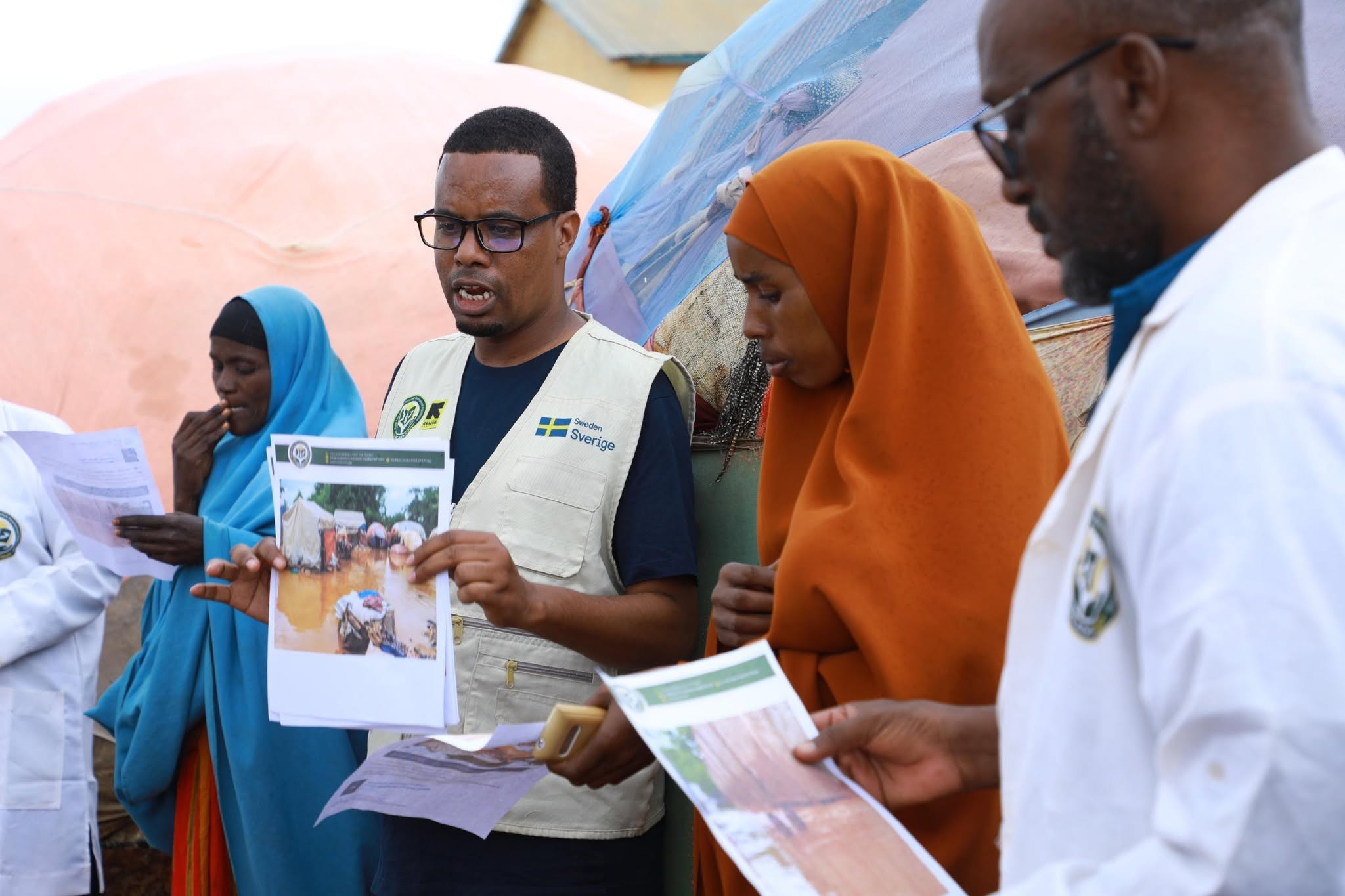
Recent warnings on a potential dire humanitarian situation from the federal government of Somalia, Medicine Sans Frontiers, local aid agencies, Integrated Food Security Classification (IPC) and the UN indicate that Baidoa’s Southwest State is facing, not only a deteriorating humanitarian conditions but growing difficulties in accessing life-saving assistances. The city “Baidoa” remains one of the Somalia’s largest destination and protracted displacement centres with already multiple displacement-related needs and vulnerabilities as it currently hosts more than 540,000 internally displaced persons (IDPs), per recent humanitarian reporting from ACAPS in August 2026, and drawing on IOM, and MSF documentations. An increasingly severe humanitarian emergency is unfolding in Baidoa, further exacerbated by armed confrontations between forces loyal to deposed President Abdiaziz Laftagreen and the federal government of Somalia, coupled with repeated displacement, acute malnutrition and mounting restrictions on humanitarian access, where the lives of hundreds of thousands of vulnerable people are threatened.
For decades, Baidoa has long-served as a major refuge for vulnerable families displaced by droughts, floods, armed conflicts and the collapse of rural-urban migration, resulting in successive waves of displacements, growing humanitarian needs and prolonged dependence on humanitarian assistance. While there are over 540,000 IDPs, according to UN agencies, the latest escalations of violence have added another layer of complexity and vulnerabilities to communities already struggling with inadequate shelter, education, food insecurity, added to limited access of safety net. The present humanitarian challenges in Baidoa are therefore defined by the interaction between long-standing displacement and new shocks that threaten the fragile survival arrangements displacement households have established.
Renewed fighting in August, September and early October has further destabilized the humanitarian environment. According to the United Nation Population Fund (UNFPA), armed confrontations in early September displaced approximately 14,832 people, of whom 79 percent were women, children and elderly. A subsequent escalation beginning September 28 displaced more than 5,600 civilians, according to UNHCR’s October flash alert. These successive episodes demonstrate the recurrent nature of displacement in Baidoa and the growing pressure on host communities, temporary settlements and already stretched humanitarian services. Additionally, the consequences of insecurity extend beyond population movements. On Sept 28, MSF reported that roads leading to hospitals had been blocked, a healthcare facility severed damaged, a health worker killed and an ambulance looted during the latest confrontation. The organization warned that restrictions on movement were preventing wounded civilians from reaching medical facilities and other essential services. Earlier clashes on Aug 17 and September 3, had already resulted in substantial number of wounded patients being treated at regional hospital where MSF supports several departments in collaboration with the Ministry of Health.
These developments expose an increasingly important distinction between the availability of humanitarian services and their accessibility to affected populations. A hospital may remain operational while patients are unable to reach it safely; similarly, humanitarian assistance may be available at established distribution points while displaced families face insecurity, distance or transport barriers that prevent them from obtaining support. Repeated displacement can also interrupt nutrition treatment, medical referrals, protection services and community support networks, particularly for households relocating outside established displacement settlements.
Concerns over humanitarian access were already evident before the latest fighting. On September 25, the Somali Disaster Management Agency (SoDMA), with UNICEF support, concluded consultations examining security challenges and humanitarian movement along the Mogadishu–Baidoa road corridor. The discussions focused on road conditions, movement restrictions, security information and coordination mechanisms intended to facilitate reliable humanitarian access. The initiative highlights the strategic importance of transport corridors to Baidoa's humanitarian response, particularly for the movement of personnel, medical supplies, food assistance and other essential commodities.
The humanitarian access challenge is unfolding against an exceptionally severe food-security outlook. The September 23 IPC analysis projects that approximately 26,000 internally displaced people in Baidoa will face Catastrophe (IPC Phase 5) food insecurity between October and December 2026, indicating extreme food deprivation and a heightened risk of starvation and livelihood collapse. The assessment also identifies a risk of Famine under a plausible worst-case scenario involving more severe flooding and displacement. These findings do not constitute a famine declaration, but they demonstrate the extraordinary vulnerability of Baidoa's displaced population and the potential consequences of further interruptions to humanitarian assistance.
The joint September assessment by the Federal Government of Somalia and the United Nations reinforces these concerns, projecting that 5.4 million people nationwide will experience Crisis-level food insecurity or worse during October–December, including 1.5 million facing Emergency conditions. It further estimates that 1.92 million children under five will require treatment for acute malnutrition between July 2026 and June 2027. In Baidoa, pockets of displacement settlements are projected to reach Extremely Critical levels of acute malnutrition, making uninterrupted access to nutritional treatment, safe water and essential healthcare particularly important. The government–UN statement also notes that the famine-risk assessment for Baidoa relied on April data, with a follow-up assessment planned for October to establish more recent conditions.
MSF's operational reporting provides further evidence of the severity of deprivation. In May 2026, the organization described increasing numbers of severely malnourished children at its Baidoa facility, with hospital capacity already under considerable pressure. It also documented severe water shortages among displaced families, including households receiving insufficient water for drinking, cooking and sanitation. Since December 2025, MSF had distributed more than 30 million litres of safe water to over 21,000 people across 17 displacement sites in Baidoa, illustrating both the scale of existing humanitarian interventions and the continuing dependence of vulnerable communities on external assistance.
The implications of interrupted access are particularly serious for malnourished children, pregnant women and people requiring continuous medical treatment. UNFPA's October situation report warns that displacement and economic hardship are increasing protection risks for women and girls while disrupting sexual and reproductive healthcare and referral pathways. Such disruptions can have consequences beyond immediate medical emergencies, particularly where families lack resources for transportation or are repeatedly forced to move between settlements.
At the same time, humanitarian organizations are confronting substantial funding constraints. UNFPA reported receiving only 25 percent of the US$27 million required for its Somalia response, limiting the sustainability of reproductive healthcare and protection services. More broadly, Somalia's 2026 Humanitarian Needs and Response Plan identifies significant access restrictions in Bay and Bakool, including insecurity, checkpoints, disrupted transport routes and operational impediments that increase costs and delay assistance. These pressures demonstrate how declining resources and physical access restrictions can reinforce one another, reducing the effective reach of humanitarian operations even as needs intensify.
The onset of the Deyr rainy season introduces an additional threat. The September IPC analysis and government–UN statement warn that anticipated El Niño-related flooding could worsen food insecurity, damage livelihoods and trigger further displacement. In Baidoa, vulnerable low-lying settlements, temporary shelters, water points and transport routes face particular exposure. Flooding could further complicate access to healthcare and food assistance where insecurity has already restricted movement, increasing the likelihood that households experience several humanitarian shocks simultaneously.
The combination of conflict and anticipated flooding presents a distinct operational challenge. Insecurity can force households to relocate while restricting the routes used by humanitarian organizations; flooding can then damage shelters, contaminate water sources and further reduce road accessibility. These overlapping pressures are especially dangerous for displaced families whose livelihoods and coping mechanisms have already been exhausted. The humanitarian consequences of rainfall will therefore depend not only on its intensity but also on the accessibility of services, the preparedness of local institutions and the ability of humanitarian actors to maintain assistance during disruptions.
The United Nations has repeatedly emphasized the importance of protecting humanitarian access. In his August 2026 World Humanitarian Day address, Humanitarian Coordinator George Conway reported 41 incidents impeding humanitarian access across Somalia during the second quarter of the year, involving military operations, threats against humanitarian personnel and interference in relief activities. More recently, the United Nations expressed concern over escalating violence in Baidoa and its impact on displaced civilians, calling for the protection of civilians and essential infrastructure. UNICEF similarly warned on September 30 that insecurity was limiting children's access to healthcare and other essential services while humanitarian needs were already exceptionally high.
Beyond the immediate emergency, Baidoa exposes a structural challenge in humanitarian response planning. Assistance is frequently organized around established displacement sites, fixed service locations and periodically updated caseloads, while insecurity and climatic shocks can rapidly change where vulnerable households are located. The International Organization for Migration's Emergency Trend Tracking system, which includes Baidoa, provides a mechanism for monitoring sudden displacement, new arrivals and priority needs. However, monitoring must be translated into timely operational decisions, including adjustments to service locations, delivery arrangements and referral systems as conditions change.
This requires humanitarian coordination to move beyond measuring assistance primarily through the number of beneficiaries registered, facilities supported or distributions completed. Equally important is whether affected communities can safely reach essential services, whether treatment continues when families relocate and whether humanitarian organizations have sufficient flexibility to respond to changing conditions. Stronger coordination among public authorities, UN agencies, international organizations and local humanitarian actors will be necessary to maintain access, identify underserved populations and protect continuity of assistance.
Baidoa's emerging humanitarian emergency is therefore not simply a crisis of increasing needs, but an increasingly serious crisis of access. Armed violence is disrupting civilian movement and essential services, repeated displacement is changing where assistance is required, funding constraints are weakening operational capacity, and anticipated flooding threatens to create further barriers. These pressures are converging among communities already experiencing severe hunger, malnutrition and prolonged displacement.
Preventing further deterioration will require sustained humanitarian financing, protection of civilians and healthcare facilities, safe movement along critical supply routes, and greater flexibility in humanitarian operations. Above all, assistance must remain accessible as displacement patterns, security conditions and climatic risks change. The immediate test for Baidoa is whether humanitarian institutions and public authorities can translate increasingly clear early warnings into coordinated action before vulnerable households lose access to the services upon which their survival depends.
For Baidoa's displaced communities, the danger is no longer limited to rising humanitarian needs. It is that the essential assistance required to prevent further suffering may become progressively harder to reach, precisely when it is needed most.