The Somali Monitor
As U.S. Funding Dries Up, Somalia's African Union Mission Faces an Uncertain Future
Washington's decision to stop funding the UN logistics office that sustains Somalia's African Union peacekeeping mission has forced an early reckoning over troop levels, counter-insurgency gains, and what comes after the mission's current mandate expires.
African Union
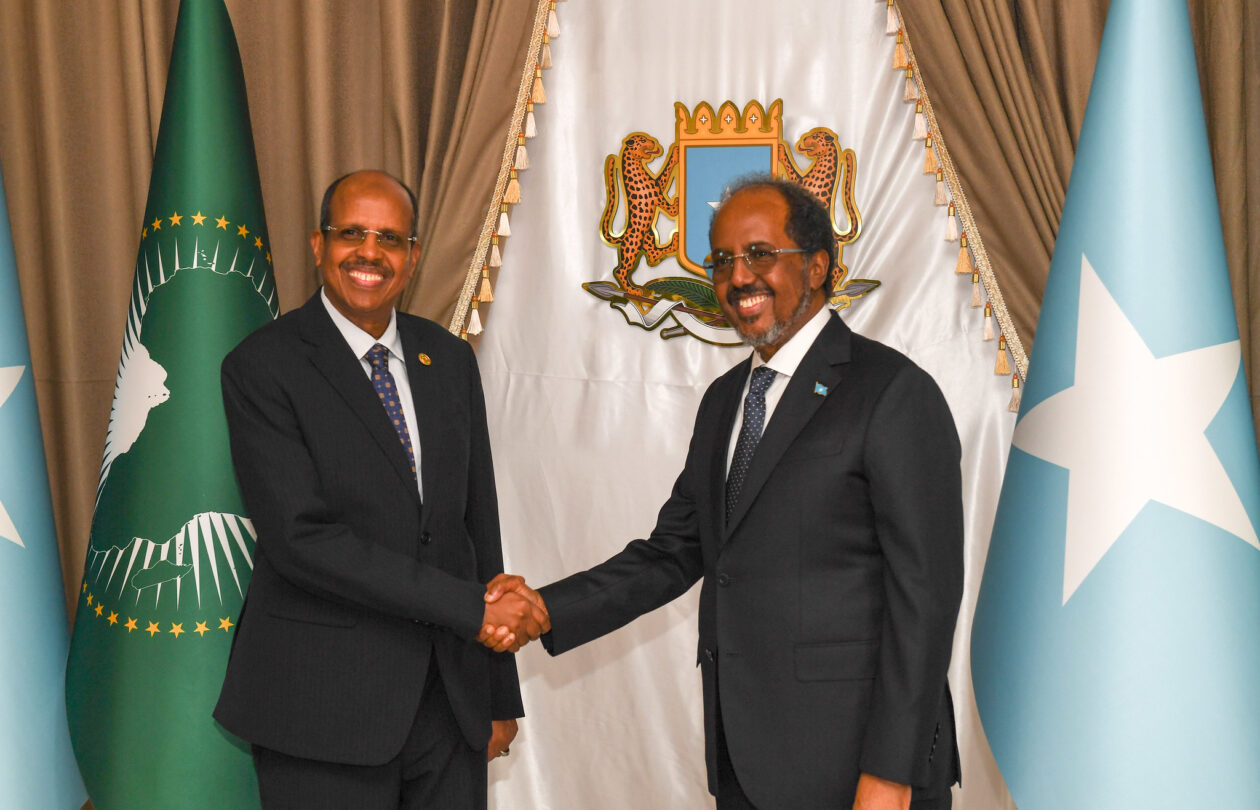
The African Union Support and Stabilization Mission in Somalia (AUSSOM) — the roughly 11,800-strong force backing the Somali government against al-Shabaab — is confronting what officials now describe as an existential funding crisis.
The immediate trigger came on July 1, when the United States formally notified the African Union it would stop funding the UN Support Office in Somalia (UNSOS) beyond December 31, 2026. UNSOS is the logistical backbone of AUSSOM, supplying fuel, transport, medical support, and troop stipends; its total budget runs to roughly $500 million a year, shared across AUSSOM, the Somali National Army, and a separate UN political mission. Washington had already withdrawn a 25 percent funding share in October 2025 to address an earlier shortfall, and officials now describe the mission's financing as effectively running on short-term pledges rather than any durable mechanism.
The numbers illustrate the gap. AUSSOM required roughly $190–196 million in troop reimbursements for the 2025–26 financial year; pledges have covered a small fraction of that, reportedly as little as $48.6 million at one point this year. The European Union remains the mission's single largest donor, contributing €75 million this year on top of nearly €2.8 billion given to AU-led missions in Somalia over the past two decades — but EU officials have said plainly that European funding alone cannot substitute for a durable, UN-backed financing mechanism, which has so far failed to materialize despite a 2023 UN Security Council resolution intended to establish one.
The consequences extend beyond accounting. Analysts and UN officials interviewed by regional outlets have warned that a funding collapse could force an accelerated AUSSOM drawdown, potentially creating openings for al-Shabaab — which has shown renewed operational strength over the past year — to regain territory the mission and Somali forces spent years clawing back. One unnamed UN diplomat in Addis Ababa was quoted warning that if AUSSOM's funding does not materialize, Somalia's president could ultimately be pushed toward negotiating directly with the insurgency, a scenario the mission was designed to prevent.
Somalia's government, for its part, has taken an unusually assertive role in shaping AUSSOM's structure and troop composition — a degree of host-country control over an international force that some regional security analysts view as a notable, and potentially precedent-setting, departure from how AU and UN missions typically operate.
The UN Security Council has asked the African Union to report back by late October with updated plans that account for the shortfall, as part of its ongoing review of the mission's mandate. What form AUSSOM takes afterward — a smaller mission, a different funding structure, or an accelerated handover to Somali forces — remains, as of this writing, unresolved.