
The Somali Monitor
Abdirahman Abdishakur: Two Decades of Political Influence, but What Is In for Somalia?
From the 2008 Djibouti peace process to serving as Somalia’s Minister of National Planning and International Cooperation, coupled with shifting political alliances in several different administrations, Hon. Abdirahman has remained influential within Somalia’s political establishment. However, Abdirahman’s nearly two decades in politics raise critical questions about his political elite-centric bargaining, political entrepreneurship, consistency, constituency accountability and the limited institutional reforms and vision associated with his longstanding role in Somalia’s governance.
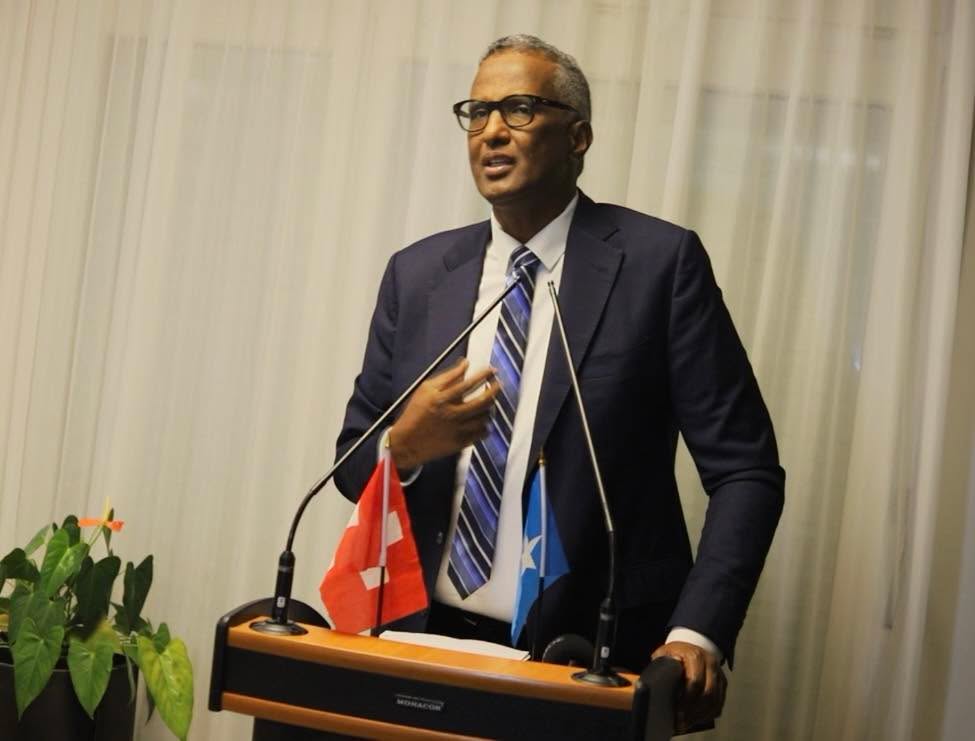
Photo: Courtesy of Abdirahman Abdishakur’s official Facebook page
MOGADISHU — November 8, 2026.
Abdirahman Abdishakur Warsame has spent nearly two decades moving between Somalia's transitional governments, international advisory institutions, opposition coalitions and presidential appointments. As leader of the Wadajir Party and a federal parliamentarian, Abdirahman puts himself frequently as a critic of weak governance, corruption, electoral manipulation, lack of accountability and the concentration of political authority. Yet his own career raises an equally important question: what lasting institutional reforms has he delivered after years of participating in the political arrangements he now challenges?
Abdirahman’s political trajectory illustrates a recurring sustaining feature of Somalia's political establishment among the political class, where experienced politicians like him move between government and opposition as alliances and political circumstances change. Abdishakur's record is particularly relevant because he has participated in major political settlements, served within successive administrations and maintained access to international decision-making structures. The central issue is whether this experience has produced measurable public benefits or primarily sustained his influence within a system that continues to struggle with weak governance and institutional accountability.
Abdirahman's political evolution began long before his involvement in Somalia's successive governments. From early Islamist activism to legal studies in Sudan and Malaysia, followed by years of diaspora political engagement in the United Kingdom, his journey reflects a gradual transition from religiously influenced political movements into Somalia's governing establishment. Abdirahman’s involvement in the Islamic Courts Union's negotiating structures, subsequently documented by the International Crisis Group, and his leadership in the Alliance for the Re-liberation of Somalia placed him at the centre of the political negotiations that produced the 2008 Djibouti Agreement and facilitated Sheikh Sharif Sheikh Ahmed's presidency. Abdishakur emerged as a national Somali political figure through the Alliance for the Re-liberation of Somalia (ARS), serving as a senior chief negotiator during the 2008 Djibouti peace process. The agreement expanded the Transitional Federal Parliament from 275 to 550 members, allocating 200 additional seats to the ARS and 75 to civil society and other constituencies. Abdishakur was among the signatories to the Djibouti Agreement, which facilitated the integration of opposition figures into the transitional government. Although the settlement helped reduce political confrontation and broaden participation, it also reinforced a system in which parliamentary representation was distributed through negotiations among influential political actors which he is current part and parcel of it, with minimal changes. The expansion created hundreds of additional positions without corresponding guarantees of stronger legislative oversight, accountability or public representation. Abdishakur was not solely responsible for these shortcomings, but his leadership participatory placed him among the key political figures who helped establish an enlarged transitional elite, out of a fashionable and a lasting elite settlement even before the institutions needed to hold it accountable had matured.
As noted, following the 2008 Djibouti Agreement, which facilitated Sheikh Sharif Sheikh Ahmed’s presidency in 2009, Abdirahman Abdishakur Warsame moved from chief opposition negotiator to Minister of National Planning and International Cooperation, illustrating how Somalia’s political settlements often transformed negotiating influence into executive authority. Despite opportunities to shape national planning, donor coordination and institutional reconstruction, measurable evidence of lasting reforms associated with his tenure remains limited. More revealingly, Abdishakur resigned from the cabinet in early 2010 and aligned himself with a competing parliamentary faction, marking an early political rupture with the very administration he had helped establish. This pattern of political cooperation followed by confrontation would later emerge in his relationships with Presidents Mohamed Abdullahi (Farmaajo) and Hassan Sheikh Mohamud. Abdirahman’s shifting alliances across three presidencies raise broader questions about his political consistency, institutional accountability and whether Somalia’s recurring elite negotiations have advanced meaningful governance reforms or primarily redistributed political influence, and benefits among established political actors.
Paradoxically, Abdirahman’s involvement in the controversial 2009 maritime Memorandum of Understanding (MoU) with Kenya further raised questions about ministerial accountability under dubious deals with foreign countries. Abdishakur signed the Memorandum on Somalia's behalf, as documented by the United Nations Treaty Collection. Although subsequent legal proceedings do not establish that he personally surrendered Somali maritime territory, the controversy demonstrated the importance of good governance, transparent decision-making and parliamentary scrutiny when government representatives negotiate agreements affecting national interests. And unfortunately, this type of behaviour may still be relevant today in a different form.
In the February 2017 presidential election, Abdirahman Abdishakur Warsame contested on a platform of political change but secured limited parliamentary support as Mohamed Abdullahi Farmaajo emerged victorious. Following the election, Abdishakur reportedly sought the premiership and later, according to unverified accounts, the position of chief political adviser to Farmaajo. Fahad Yasin, a key figure in Farmaajo’s election campaign who subsequently became presidential chief of staff, reportedly emerged as an obstacle to these ambitions, although his precise role remains unsubstantiated. Abdishakur subsequently became one of Farmaajo’s most vocal opponents, culminating in the December 2017 security raid on his residence that killed five of his bodyguards. This political reversal raises questions about the intersection of executive appointments, competing political ambitions and opposition politics within Somalia’s governing establishment. According to Reuters, while five of his bodyguards were killed, and Abdirahman being arrested for treason accusations, the operation generated widespread political controversy and reinforced concerns about the use of state security institutions against political opponents.
The raid also became an important element of Abdishakur's subsequent political standing. Abdirahman’s confrontation with President Mohamed (Farmaajo) strengthened his identification with opposition constituencies, particularly among his clan circle and communities that viewed the security operation as an abuse of government authority. By the 2022 parliamentary elections, this political history intersected with his efforts to secure a seat in the House of the People. On February 14, 2022, Abdishakur won the Galmudug parliamentary seat HOP#138 in Dhusamareb, receiving 86 votes after his opponent, Naima Hussein Ali, withdrew. Somali Dispatch documented the result, while Garowe Online reported that members of his clan constituency had opposed efforts to prevent him from contesting the seat and pressured Galmudug's leadership to allow his participation. That support introduces a question largely absent from assessments of his political career: what has Abdishakur delivered to the constituency that enabled his parliamentary representation? His national political commentary is extensive, but public visibility is not a substitute for constituency accountability.
The revolving nature of Abdishakur's political career became apparent again after Hassan Sheikh Mohamud returned to the presidency in May 2022. On May 24, the president appointed Abdishakur Special Envoy for Drought Response, citing his experience in humanitarian and development affairs. Making Abdirahman the third political appointee by President Hassan’s government, the appointment returned him to a senior government-facing role involving international advocacy, donor engagement and coordination during one of Somalia's most severe humanitarian emergencies. Abdirahman’s work included diplomatic outreach and engagement with humanitarian partners. Such responsibilities were important during the drought, but they also warrant an assessment of results. The relevant questions concern the resources his office directly helped mobilise, improvements in coordination and whether the appointment contributed to lasting national preparedness. These outcomes should be measured independently rather than inferred either from his international visibility or from the persistence of Somalia's humanitarian challenges.
By 2024, however, Abdishakur, after leaving the presidential envoy position, had again become a prominent critic of the administration that appointed him. His disagreements with Hassan Sheikh intensified over treaties with Turkey, and its lack of parliamentary scrutiny, and among other issues including constitutional amendments, electoral arrangements, presidential mandates and the management of public institutions. In June 2026, he publicly challenged the government's legitimacy and its handling of security and political negotiations, according to Dawan Africa. His opposition continued into October, when he accused the president of prioritising political survival over national security, economic and humanitarian concerns, as reported by WardheerNews.
This movement between executive appointments and opposition leadership is not inherently evidence of political inconsistency. A politician may legitimately accept public responsibilities and subsequently oppose government policies. Nevertheless, Abdishakur's repeated transitions invite scrutiny of how his reform principles have been applied across different administrations, particularly when he has alternated between advising political leaders and challenging their authority. The same applies to former NISA Director Abdullahi Mohamed Ali (Sanbaloolshe), who is reportedly engaged in an armed confrontation in Hirshabelle against forces of the very government whose intelligence agency he once led. With or without coincidences, Abdirahman political pattern is visible across his career: a negotiator in Djibouti, a minister under Sheikh Sharif, an international political adviser, an opponent of Farmaajo, a drought envoy under Hassan Sheikh and subsequently a critic of Hassan Sheikh's administration. These roles demonstrate political experience and continued relevance, but they also place him within the same network of established actors who have shaped Somalia's political institutions for nearly two decades.
At the broader-political level, Abdirahman’s Wadajir Party's emphasis on self-reliance, national unity and institutional reform therefore requires examination against its organisational achievements. Beyond Abdishakur's personal prominence, the party's independent membership, internal accountability, electoral organisation and measurable policy contributions remain insufficiently documented in publicly accessible sources. Without such evidence, it is difficult to determine whether Wadajir represents a durable institutional alternative or principally a platform for its leader's political participation.
Overall, the larger question concerns the responsibilities of Somalia's established political class. Abdishakur cannot reasonably be blamed for the country's collective governance failures, nor should his opposition to successive presidents be dismissed merely because he previously served in government. But his repeated access to political authority, negotiations and international institutions makes his own record subject to the same standards of accountability he demands from others including the current president HE Hassan Sheih Mohamud. The central contradiction is that Abdishakur has spent much of his career advocating reform while participating in the elite-negotiated arrangements that continue to dominate Somalia's political system. Abdirahman’s experience has secured him influence across changing administrations, yet the institutional outcomes attributable to his leadership remain less clearly demonstrated than his ability to negotiate, criticize and remain politically relevant. Ultimately, Abdishakur's career reflects the difficulty of distinguishing political longevity from institutional achievement. Nearly two decades after his Djibouti conference, Somalia continues to confront many of the governance disputes that its political settlements were intended to resolve. Abdirahman’s record may contain genuine contributions, controversies and unanswered questions. What remains to be demonstrated is whether his continued presence within the political establishment has produced the lasting reforms, and accountability he has repeatedly advocated and continue to advocate.
info@thesomalimonitor.com